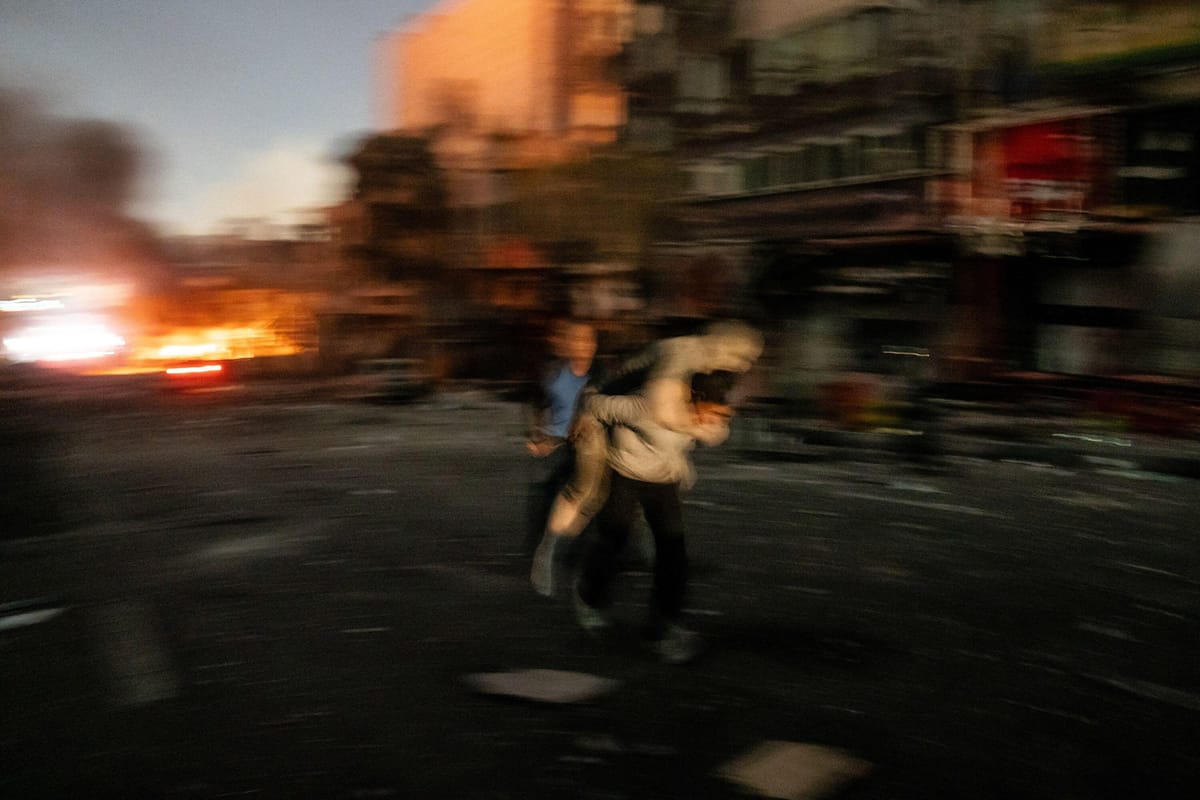
With Iran at war and the internet largely cut off, reliable information from inside the country is scarce.
Over the past week, Aria Farahmand — a pseudonym — has kept a diary of the conflict’s opening days, offering a glimpse of everyday life inside the war.
For his safety, we are withholding his real name.
What we can say is that he is an established reporter in Tehran who has contributed to outlets including Al Jazeera, The New Humanitarian, and The New Arab. He is also a steadfast pro-democracy advocate, supporting the recent protests against the Iranian regime.
Yet Farahmand is also sharply critical of opposition factions that champion foreign intervention. War, he firmly believes, cannot produce a free nation, a lesson he sees written in the historical tragedies of Chile, Iraq, and Afghanistan.
Day 1: Friday, 27 February
It has been less than 24 hours since the United States and Iran held talks in Geneva. According to insiders, the negotiations made “significant progress”, raising hopes that war might no longer be inevitable. It feels like a reason to celebrate, and my wife and I visit friends in northern Tehran.
Their home is a small but beautiful two-bedroom apartment, decorated in a sleek, modern style. With six other guests besides us, we squeeze together on sofas and chairs, sharing gheimeh stew and fresh apple juice. The conversation swings endlessly between fear of war and hope for a deal.
In truth, we are all daydreaming. Some imagine a normal life without crippling economic sanctions. Others speak openly about whether a war might finally bring down the dictatorship and allow them a taste of freedom.
Reality asserts itself on the way home. Five minutes into the journey, we reach a checkpoint, one of many installed after the 12-day war of 2025. Men stand beside the road gripping AK-47s, watching passing cars with vacant expressions. They wave us through, but the anxiety is suffocating.
What if they stopped us? What if they searched our phones?
You might assume we carry highly sensitive secrets to be this afraid. The reality is much simpler. We don’t. In this country, if you do not support the state, an everyday exchange with a friend, the accounts you follow on Instagram, or even writing a diary like this one can be enough to ruin your life.
The warm glow of the evening evaporates instantly.
Day 2: Saturday, 28 February
I wake early, eager to get through a long work day. The news, as they say, isn’t going to write itself.
Driving to the office, I listen to the Omani foreign minister speaking from Washington. I message friends on Telegram, remarking that it’s impressive he flew straight from Geneva to DC to push for a deal. But we all know what this frantic diplomacy usually means. My colleague Ramin replies with a joke: “Winter is coming?”
An hour later, at around 9:30am, I am at my desk preparing a report when a terrifying whistle tears through the air, followed by a massive explosion. Then another. We recognise the sound immediately.
The war we had all been waiting for has arrived.
I text Ramin again: “Winter is here.”
There are no bomb shelters in Tehran — not near my office, and practically nowhere else in the city. So management tells everyone to go home. Before leaving, I ask whether anyone needs a ride, but they either have their own cars or are heading in different directions. Outside, panic has already taken hold. People are pouring out of supermarkets carrying canned food and toilet paper. With traffic clogging every road, a commute that normally takes less than an hour drags into a five-hour ordeal.
Register for free to read this article.