
The first thing you see when you exit the station at Burton is the little glimmering tip of a cooling chimney from one of the breweries. Is it a working brewery, or just some leftover infrastructure from the time when Burton was Britain’s beating beer heart? It is hard, really, to ever know.
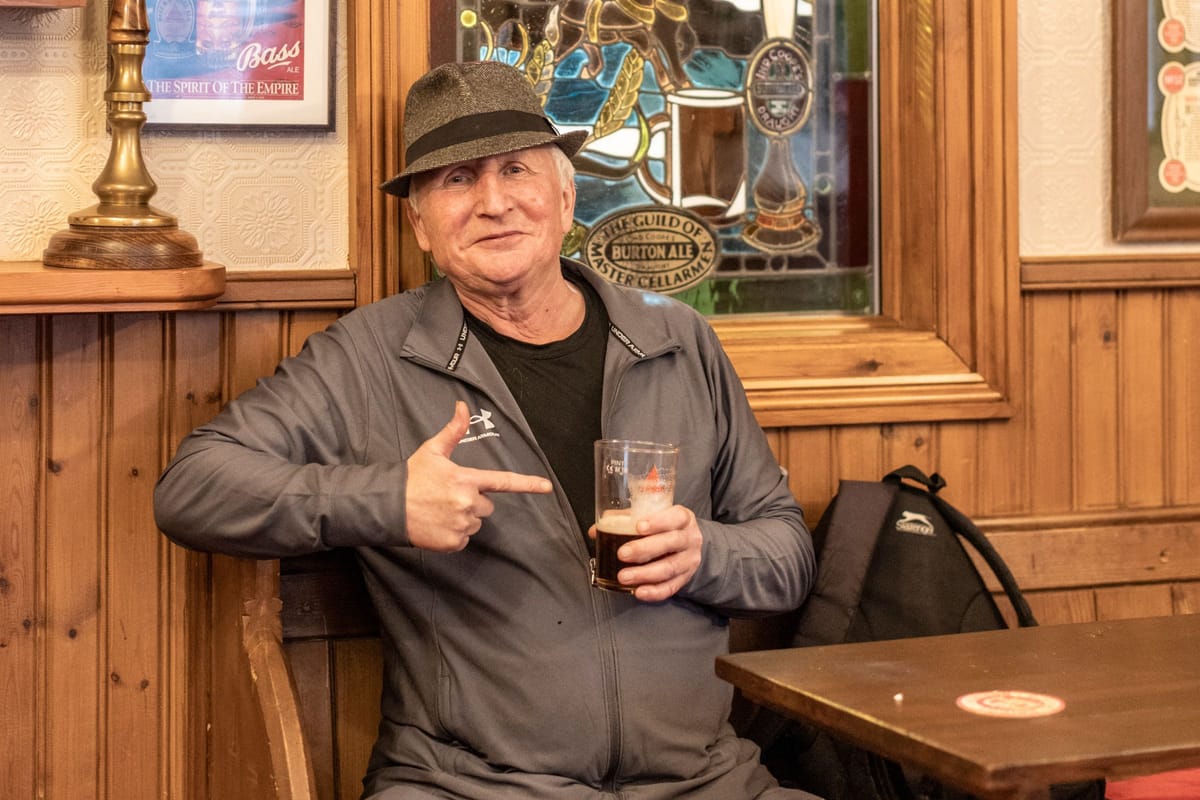
Walk around Burton and everything is named after beer: Cooper this, Brewer that. There are brass studs in the pavements that demarcate where each brewery was allowed to trade up to back in the day. Sure, the town is now made up of megacorporate monster-breweries pumping out half of the world’s lager, but there are also independent back-of-pub factories redefining craft, and individual tub brewers making their own when-it’s-gone-it’s-gone beer. The high street is littered with the usual high-street things — complicatedly neon vape shops, curry houses, a drive-thru Tim Horton’s for some reason. But every time you see one, you think: why aren’t you just brewing beer? It seems, when you get here, like the only possible thing to do.
During the 19th century, Burton upon Trent was known as the beer capital of the world. In 2026, it is easily the beer capital of England, and can make a fair claim to be the beer capital of Europe, too. But there’s still a curious cross-pull: beer somehow impinges on everything and also doesn’t; a lot of the lager brewed here makes greedy use of Burton’s gorgeous natural mineral-rich water, then ships it out in lorries to the rest of the world to sup.
You turn up and expect a sort of year-long Oktoberfest: beer guys as far as the eye can see, all the flat caps and bad jeans and leather phone cases you can handle. But sometimes you just turn down a street to a silent dead end that terminates in an industrial park. There used to be a National Brewing Centre here, but it closed in 2022. This place used to pump IPA down in train-track-shaped arteries to London and beyond. That was a hundred years ago now. Where’s it all hiding?
There was, sadly, only one way to find out. I had to drink as much of Burton’s beer as my body could handle, and ask everyone unfortunate to stand near me while I did it: what happened?
Stand still in Burton-on-Trent for more than 15 seconds and someone will say the word “gypsum” to you. In Burton (I will hereby be referring to the place as such: it’s Burton upon Trent, and also known as “Burton-on-Trent”, but you get the idea), a nine-foot seam of it runs underneath the town, seeping a milky white slough of minerals into the local water.
This is the first stroke of magic of the place: the stuff that, in 1822, Samuel Allsopp figured was perfect for brewing the Hodgson’s pale ale he’d first sampled in London, the first batch brewed in a teapot and quickly replicated to be exported across the sea to Bombay, where thousands of — may as well say it, colonialists — could enjoy the taste of English beer beneath the heaving Indian sun. By 1861, Allsopp & Sons was the second-biggest brewery in Burton (behind the we’ll-get-to-it ultimate number one, Bass). The popularity of the hoppier-tasting beer that Burton’s water brewed meant that, by 1884, there were 34 breweries trading in the town, many copying Allsopp’s innovation and supplying the demand for the now-renowned Burton ale. Beer was a-booming. “Gypsum.”
This is not a paywall!
To read this rest of this article, register for free.