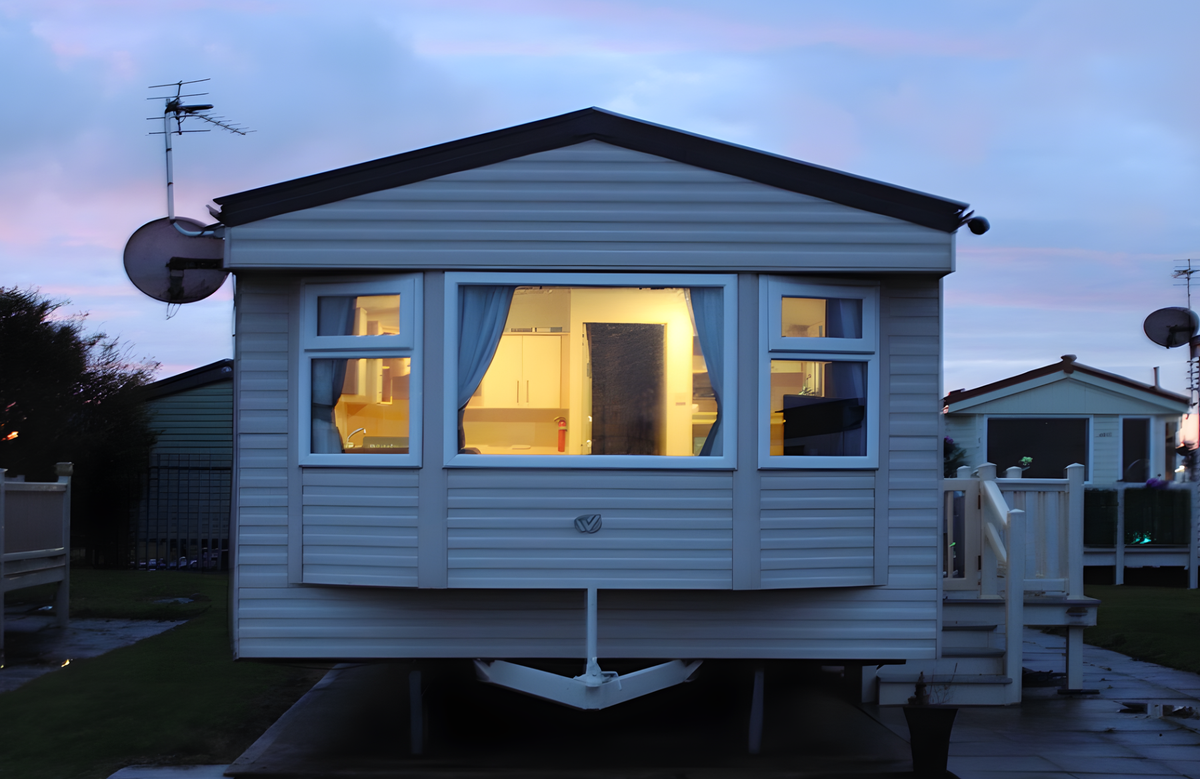
There are two things to know about being inside a burning caravan.
The first is what happens to the air. The walls and fittings — made of treated wood, plastics, foam and rubber — give off a thick black smoke. In a confined space, breathing it in feels like inhaling sand. In reality, it’s carbon monoxide. It only takes a few gulps to knock you out.
The second is how quickly it’s over. Around seven minutes for a caravan to burn to the ground. Slightly longer if it is new and fitted with fire-retardant materials; slightly less if it is old and poorly insulated. The caravan that caught fire on 23 August 2021 burned for seven minutes. Inside was Louisiana Brooke Dolan. She was two years old.
It was the third day of what was meant to be a trip of firsts. The children’s first holiday. Louisiana’s first time at the beach. Her first ride at a funfair. Her first time in a caravan.
The family needed a break. Back in Newark, where they lived, Louisiana’s mother, Natasha, had just escaped a relationship defined by domestic violence. The children’s father had recently been sentenced to three years in prison. “It was our time to get away,” Natasha tells me.
That day had been ordinary, even joyful. Natasha and her four children — Lexus, 10; Timothy, 9; James, 4; and Louisiana — spent the afternoon on the beach in Ingoldmells, a shabby but dependable resort town on the Lincolnshire coast. They went on rides at the funfair. They ate sausage and chips.

Later, they returned to the caravan they were renting for the week. It was cramped but serviceable, just enough room to play games and edge past the bunk beds. The boiler didn’t work, which was a pain. It meant no hot showers or water for the first two days. But on the third, the site manager’s son came over to light it manually. That seemed to fix it.
At around 10.30pm, Lexus, the eldest, became unwell and started vomiting, as kids sometimes do after a day of excitement. Natasha took her into the shower. Five minutes later, when she stepped back out, she walked into what she thought was a cloud of steam. Then she smelled smoke.
“I opened the door and the fire was already above my head,” Natasha, now 38, says. “I could hardly open my eyes. The smoke was like black powder.”
She picked up Lexus and dragged her towards the window, the only exit point yet to be engulfed. She forced it open. Gasping for air, Lexus fell clear. Natasha turned back, grabbed the two nearest children, and did the same.
She then turned around once more, patting through the darkness, throwing her arms as wide as she could. Her skin was blistering. Her throat was closing. She could feel herself losing consciousness. Before she did, Natasha made a decision no parent should ever have to make. “I just couldn’t find her,” she says.
Later, an inquest heard that Louisiana had taken two breaths of smoke and collapsed. “If I’d moved my legs,” Natasha says now, “I probably would have kicked her. She was just there, on the floor.”
Trailer parks are considered an American phenomenon: a marginal form of housing, easy to caricature and easier to ignore. The term “trailer trash” has been thrown around since the early ‘50s, a shorthand for families shut out of the suburban dream. Today, more than 20 million Americans — around 6% of the population — live in them.
A similar story exists in Britain, though it’s far less documented, on a smaller scale, and falls under a different name. Here, we rarely speak of “trailer parks”. Instead, we refer to “mobile homes” that haven’t been mobile in years, or to residential parks and static-caravan sites. When they appear in popular culture, it’s usually as light entertainment. Next month, Sky will broadcast a series in which Danny and Dani Dyer try to run one.
Register for free to read this article.