
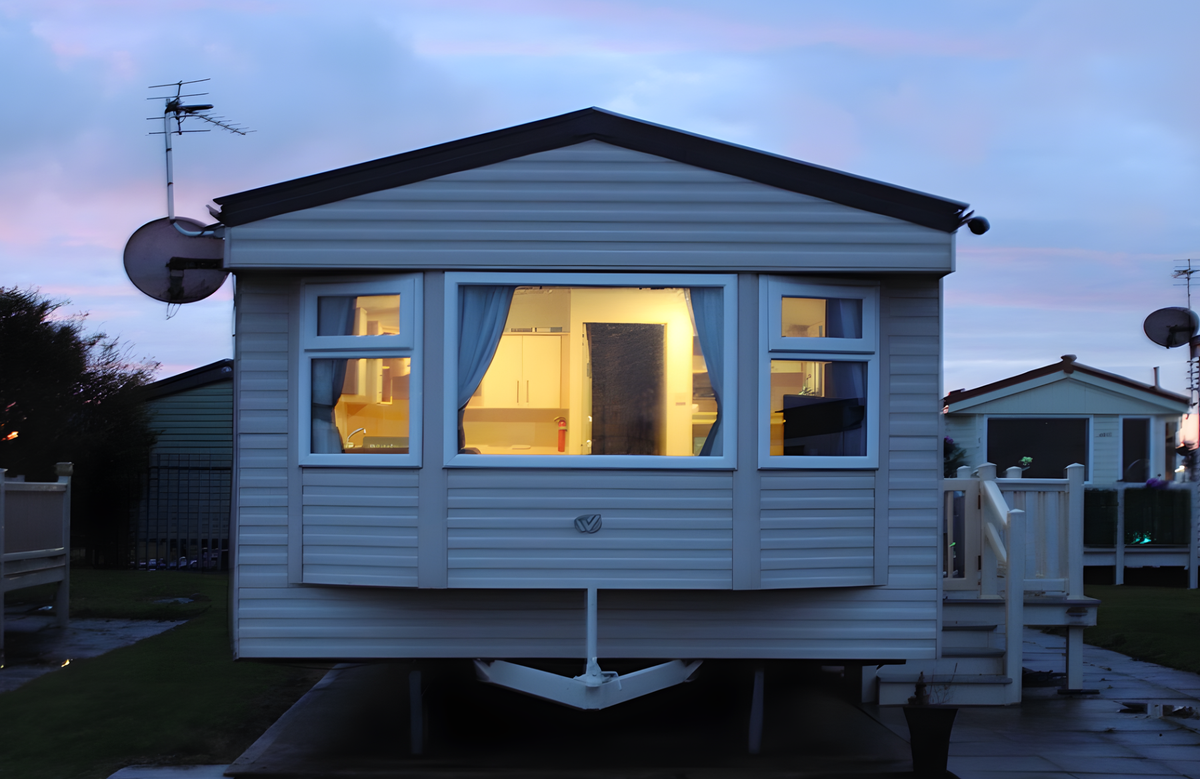
There are two things to know about being inside a burning caravan.
The first is what happens to the air. The walls and fittings — made of treated wood, plastics, foam and rubber — give off a thick black smoke. In a confined space, breathing it in feels like inhaling sand. In reality, it’s carbon monoxide. It only takes a few gulps to knock you out.
The second is how quickly it’s over. Around seven minutes for a caravan to burn to the ground. Slightly longer if it is new and fitted with fire-retardant materials; slightly less if it is old and poorly insulated. The caravan that caught fire on 23 August 2021 burned for seven minutes. Inside was Louisiana Brooke Dolan. She was two years old.
It was the third day of what was meant to be a trip of firsts. The children’s first holiday. Louisiana’s first time at the beach. Her first ride at a funfair. Her first time in a caravan.
The family needed a break. Back in Newark, where they lived, Louisiana’s mother, Natasha, had just escaped a relationship defined by domestic violence. The children’s father had recently been sentenced to three years in prison. “It was our time to get away,” Natasha tells me.
That day had been ordinary, even joyful. Natasha and her four children — Lexus, 10; Timothy, 9; James, 4; and Louisiana — spent the afternoon on the beach in Ingoldmells, a shabby but dependable resort town on the Lincolnshire coast. They went on rides at the funfair. They ate sausage and chips.

Later, they returned to the caravan they were renting for the week. It was cramped but serviceable, just enough room to play games and edge past the bunk beds. The boiler didn’t work, which was a pain. It meant no hot showers or water for the first two days. But on the third, the site manager’s son came over to light it manually. That seemed to fix it.
At around 10.30pm, Lexus, the eldest, became unwell and started vomiting, as kids sometimes do after a day of excitement. Natasha took her into the shower. Five minutes later, when she stepped back out, she walked into what she thought was a cloud of steam. Then she smelled smoke.
“I opened the door and the fire was already above my head,” Natasha, now 38, says. “I could hardly open my eyes. The smoke was like black powder.”
She picked up Lexus and dragged her towards the window, the only exit point yet to be engulfed. She forced it open. Gasping for air, Lexus fell clear. Natasha turned back, grabbed the two nearest children, and did the same.
She then turned around once more, patting through the darkness, throwing her arms as wide as she could. Her skin was blistering. Her throat was closing. She could feel herself losing consciousness. Before she did, Natasha made a decision no parent should ever have to make. “I just couldn’t find her,” she says.
Later, an inquest heard that Louisiana had taken two breaths of smoke and collapsed. “If I’d moved my legs,” Natasha says now, “I probably would have kicked her. She was just there, on the floor.”
Trailer parks are considered an American phenomenon: a marginal form of housing, easy to caricature and easier to ignore. The term “trailer trash” has been thrown around since the early ‘50s, a shorthand for families shut out of the suburban dream. Today, more than 20 million Americans — around 6% of the population — live in them.
A similar story exists in Britain, though it’s far less documented, on a smaller scale, and falls under a different name. Here, we rarely speak of “trailer parks”. Instead, we refer to “mobile homes” that haven’t been mobile in years, or to residential parks and static-caravan sites. When they appear in popular culture, it’s usually as light entertainment. Next month, Sky will broadcast a series in which Danny and Dani Dyer try to run one.
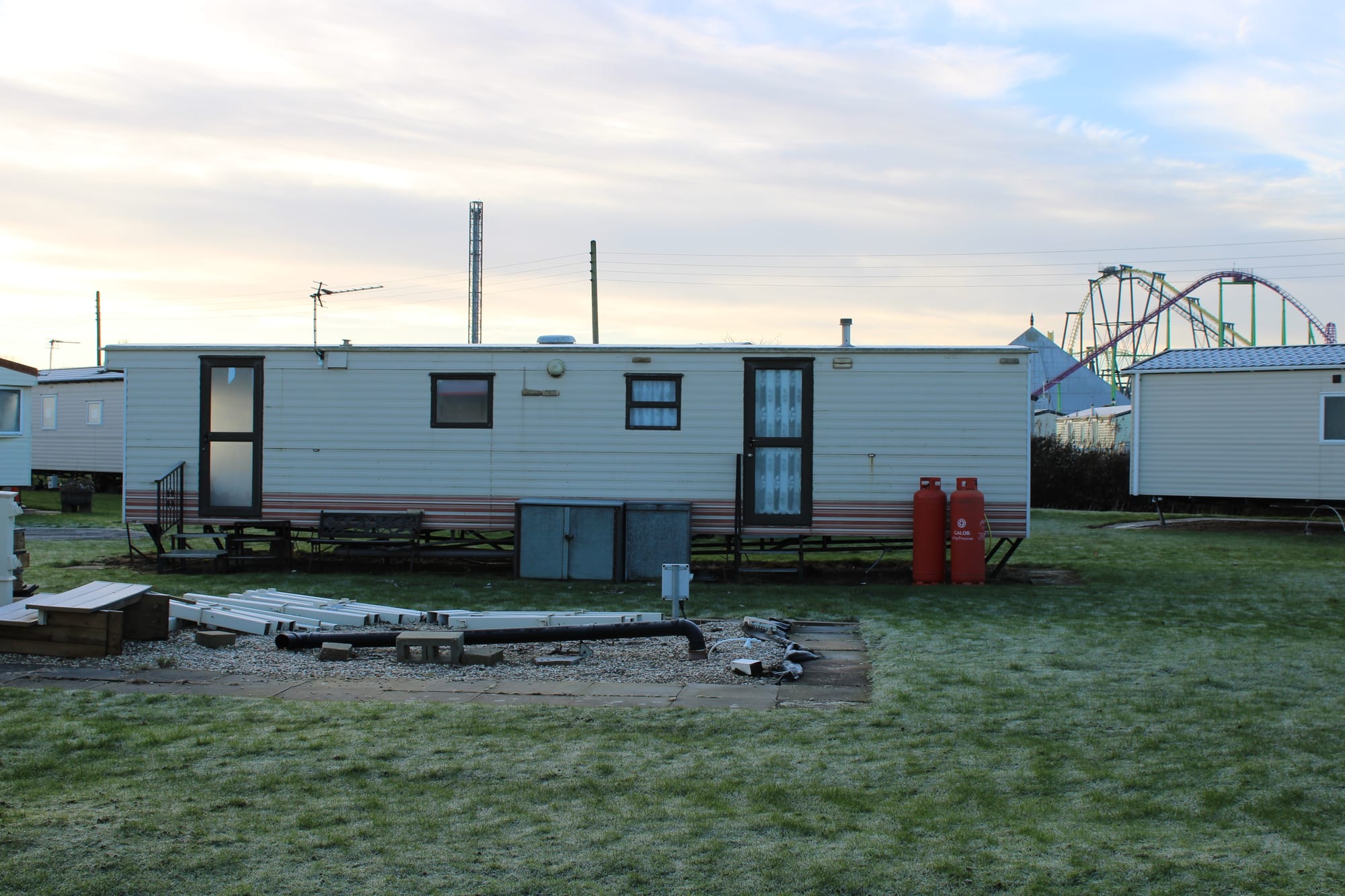
Broadly, these sites fall into two categories. The first are the roughly 6,000 “holiday parks”: open from March to November, with static caravans owned or rented by the week. Some residents stay for the full season, then sofa-surf or move in with friends until the gates reopen. Others live there illegally year-round.
The second category is open all year. These sites are rarer, partly because of demand, and partly because many site owners are wary of the kind of residents that permanent caravan-living attracts. There is no definitive national count, but it is estimated there are around 2,000 all-year parks. To avoid any trouble, most operate age restrictions, accepting only over-50s. They are sometimes marketed as retirement “villages”: calm, stress-free, and community-minded. The homes on permanent sites are usually larger and more solid than those on holiday parks, but they still look temporary.
The attraction of these dwellings is mostly economic. Static homes typically cost between £10,000 and £60,000 — though some reach £200,000 — with annual ground rent and bills running to £7,000. They are cheaper than retirement homes or conventional housing, but they offer none of the protections. Older models in particular are among the least safe and energy-efficient forms of accommodation.
Partly because of a regulatory grey zone, and partly because of a broader national blind spot, we don’t know how many people live on these sites. In 2021, the Office for National Statistics estimated that 104,000 people, around 0.4% of the population, lived in “a caravan or other mobile or temporary structure”. In the same year, the government acknowledged this population is “often under-identified”. This is mostly because residents are less likely to be registered with a GP or represented in the national census. (A minority are also occupied by migrant workers.)
What we do know, in broad terms, is that while some residents are content, people living in mobile homes are more likely to be in poor health — often with conditions worsened by their housing — and have fewer educational and work opportunities. We also know parks in coastal communities are often in flood-risk zones.
Nowhere is this more pronounced than along the Greater Lincolnshire coastline. East Lindsey district, which takes in Skegness, Mablethorpe and Ingoldmells, boasts the largest concentration of mobile homes in Europe: around 200 caravan sites, 39,000 static homes, and a permanent population of roughly 6,600.
What neither the council nor the national statistics say is how often these homes catch fire. Which they do at an alarming rate.
Data obtained by Dispatch through Freedom of Information requests shows that, between August 2020 and August 2025, there were 114 fires in mobile homes across Lincolnshire — almost one every fortnight — with the highest concentration along the coast. These resulted in five deaths.

In that five-year period, 18 mobile-home fires occurred in Ingoldmells alone — in both holiday lets and permanent dwellings. Three people, including Louisiana Brooke Dolan, were killed as a result.
Last spring, just as the season in Ingoldmells was getting underway, three caravan fires broke out in as many weeks. In retrospect, the families caught in the first two were fortunate.
The first, on 15 March, erupted at around 5am. A woman suffered serious burns to her hands after re-entering the caravan to rescue a relative, but nobody died. The fire was deemed accidental.
The second, on 1 April, began at 10.45pm and was eventually extinguished by the fire brigade. There were no injuries. Investigators later said it was likely caused by an electrical fault in the fuse board.
Four days later, Ingoldmells ran out of luck.
It was the first weekend of the Easter school holidays, and Lee Baker, 48, a plasterer from Retford, had spent the evening with his daughter Esme, 10, at The Sandancer pub, playing bingo and pool. He’d had a few drinks, but wasn’t drunk. They left at around 11pm. Back at the caravan, Lee put Esme to bed and spoke to friends on FaceTime. Just after midnight, he told them he was going to finish his cigarette and turn in.
At around 3.30am, neighbours were woken by a loud crackling sound. By the time the fire brigade arrived, half an hour later, both Lee and Esme were dead.
Once again, an inquest ruled the fire accidental. The local fire station manager confirmed there was no indication that Lee’s cigarette had caused the blaze, though he noted that any such evidence would have been destroyed by the intensity of the fire. Firefighters did find “remnants of a battery-powered device” and a tablet with a charging cable, though they could not say whether these were connected to the fire. In the aftermath, Lincolnshire Fire and Rescue advised caravan users to check for smoke detectors and warned charging against electronic devices overnight.
Natasha Broadley often thinks back to the fires in the years after her daughter’s death. “They left me numb,” she says. “I remember reading that Esme was awake when the fire got to her. It’s a mother’s worst nightmare. Those places are death camps.”
In the weeks after Esme and Lee’s death, Broadley spoke with Esme’s mother, who hadn't been on the trip, before stepping back. “Everyone needs to take their own time,” she says.

Instead, she channelled her grief elsewhere. Since Louisiana’s death, Natasha has launched a one-woman campaign for improved fire safety on mobile-home parks. There was no smoke alarm in the caravan her family had rented. Its boiler safety certificate had expired five months earlier. An inquest found the fire had started in the cupboard housing the faulty boiler, but no one was prosecuted.
“I can’t understand it,” Natasha says. “It’s obvious it wasn’t fit for purpose.” (Laver Leisure, which runs Sealands Caravan Park, did not respond to a request for comment.)
After the investigation concluded, Natasha also sought political intervention. She contacted her local MP, Robert Jenrick, who organised for Natasha to meet the Housing Secretary in parliament. Jenrick later posted a video about it, but no further action was taken.
So Natasha turned to other means. Her online petition calling for tighter regulation of caravan safety has gathered more than 6,000 signatures. She wants to do more, she says, but isn’t sure what that looks like. She cannot bring herself to return to Ingoldmells.
In January, signs along the town’s promenade still advertise cheap Guinness at the Garrison Irish Pub and all-day parties at the Cheeky Blinders sports bar. But no one is here to take up the offers, and no one is here to serve them. Every shop, café and bar will be shuttered until March.
The best view in Ingoldmells comes from the Millennium roller coaster, the pride of its Fantasy Island theme park. At 46 metres high, it’s the tallest structure in town. In summer, on a clear day at the top, the thousands of mobile homes that encircle the town look like white solar panels. Gaze south past Butlin’s (the first of its kind), and you can make out Skegness pier.
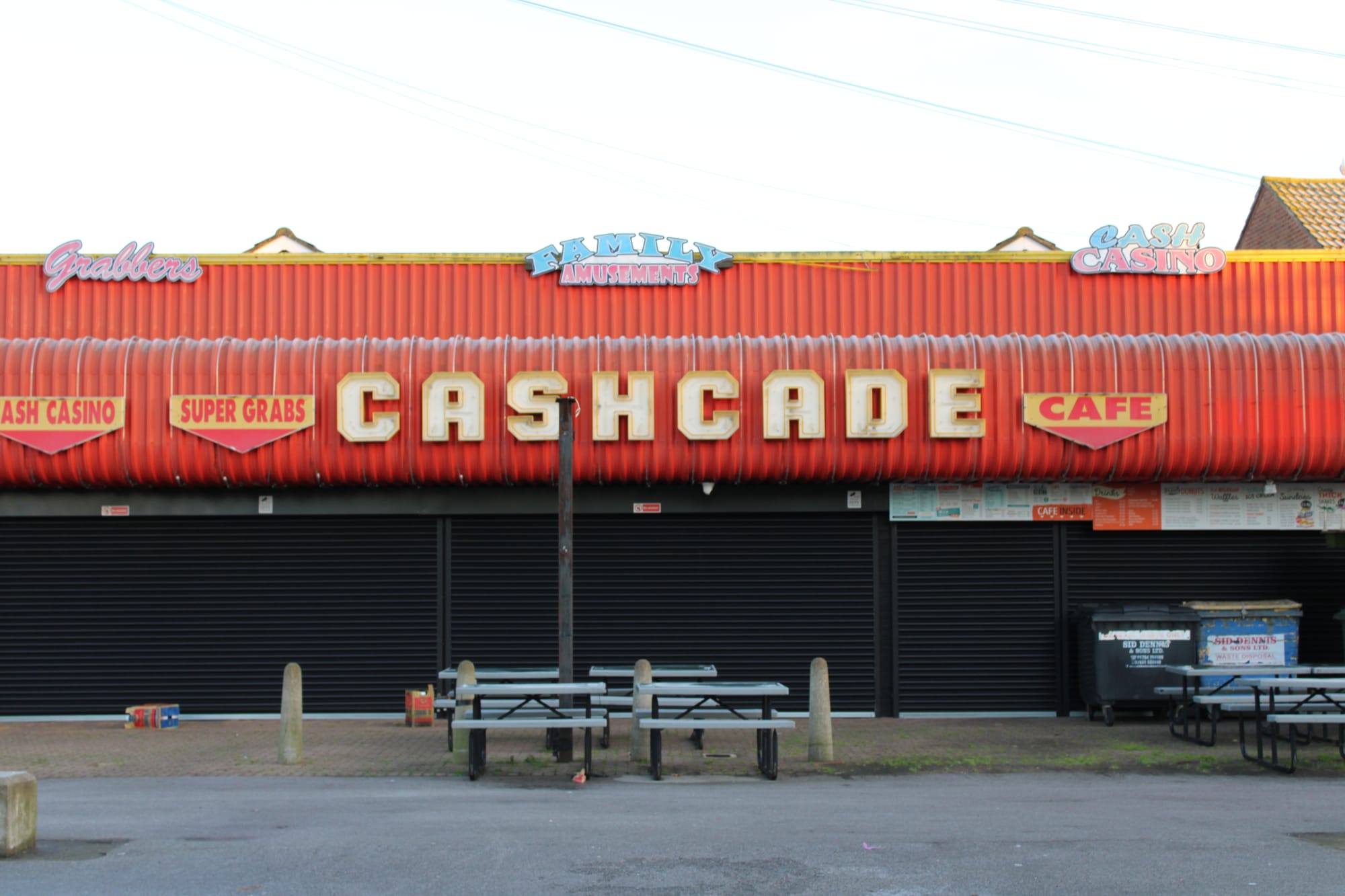
Today, however, if the Millennium were running, the view would feel faintly apocalyptic. At best, you’d see half a dozen workers scattered below, repainting rides and fixing railings in preparation for the season. The only businesses open are a Spar and a Greggs for the maintenance crews. Further inland, a Tesco Express, a takeaway, and three pubs serve Ingoldmells’ permanent residents.
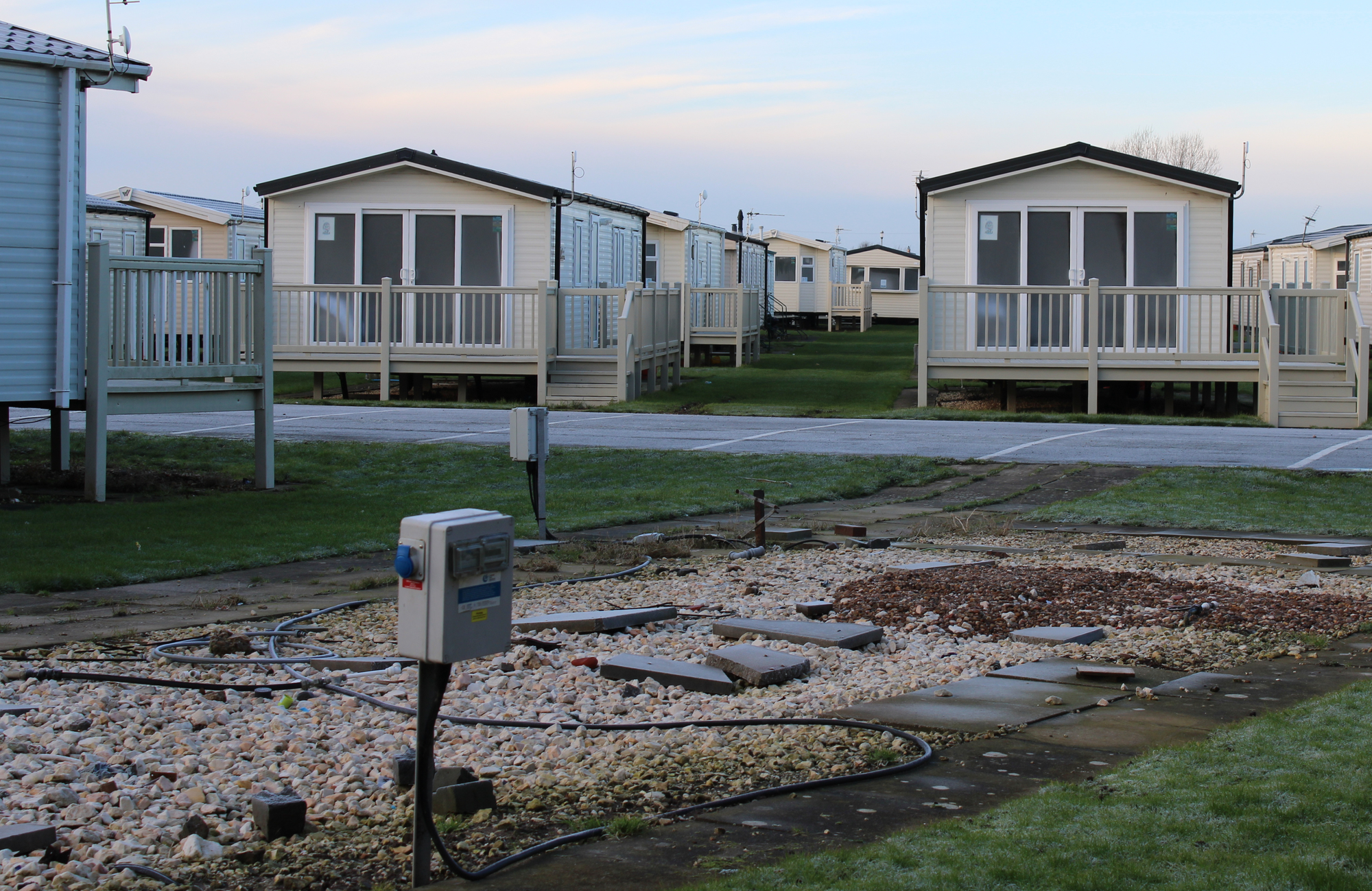
In winter, caravan fires aren’t foremost in people’s minds. Staying warm is. Two parks in Ingoldmells remain open, home to around 150 mobile homes. Garden gnomes give away the age of many residents. Football signs — Manchester United, Leicester, Nottingham Forest — hint at where they’ve come from. A handful of caravans are clearly abandoned, sagging into the gravel below. Most, though, are lived in.
Mabel, 85, sits by the window in one, doing a jigsaw of Skegness. Mabel loves jigsaws, but until a few weeks ago, she didn’t have space in her cramped living room. Now, in the corner, stands her most prized possession: a new tilted puzzle table.
Mabel’s home is compact but orderly. To the right of the door, a small double bedroom. Straight ahead, a bathroom with a shower and toilet. To the left, a galley kitchen opening onto a living room with a two-seater sofa. She has lived in Whitehaven Park for 13 years. She moved from Nottingham to be closer to her husband when he was placed in a care home in Skegness. He died in 2017.
“It feels safe,” says Mabel, who has emphysema. “There’s no trouble. And the man next door always takes my bins out.”
A few dwellings down, Tessa is less cheery. “I hate it,” she says, flatly.
Her mobile home is in worse shape than Mabel’s. The sides are peeling; the back half droops. She paid £64,000 for it five years ago and doubts she’ll see that money again. “It’s an oven in summer and a freezer in winter,” she says, gesturing at the glass frontage.
At 55, Tessa is one of the park’s younger residents. She moved from Bedford because it was cheaper. “I wish I hadn’t,” she adds. She complains about the ground rent and the over-50s rule that means her children and grandchildren can’t stay longer than two weeks.
Tessa says she’s never had trouble herself, but points to posters around the site warning of rogue traders who target elderly residents. The “season” itself brings a different shade of crime, with county lines gangs sometimes using holiday lets in other parks to store drugs. Last April, four men were jailed for using a caravan in Ingoldmells as a base to supply crack cocaine and heroin to Skegness.
When I mention the fires, Tessa shrugs. Her own health worries loom larger. She has chronic obstructive pulmonary disease (COPD) and speaks in a rasp. “I always had it, but it used to go away. Since moving here, with the extremes in temperature, it doesn’t.” She gets her shopping delivered and leaves the caravan once a week.
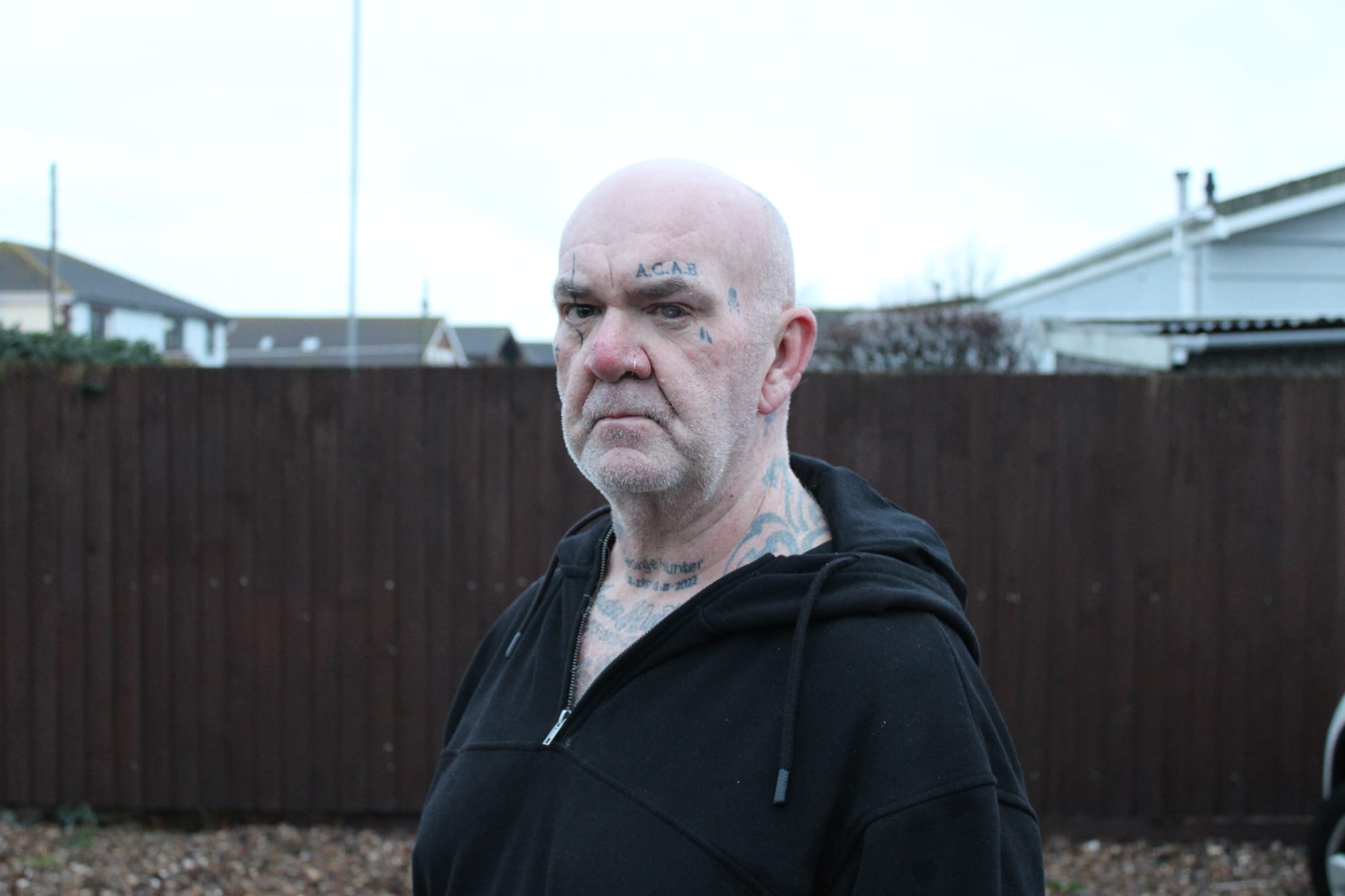
Out in the car park, another man asks for his name to be withheld but is happy to be photographed. He lives on a site across the road that closes from December to February. During those months, he stays with a friend in the over-50s park.
“It’s a cheap way to live — or it’s supposed to be,” he says. With ground rents rising, he can’t see why new people would move in. Later, I mention this to the landlord of the nearby Ship Inn. “Five years,” he agrees. “That’s all this place has got.”
Natasha Broadley isn’t sure she will ever be able to return to the seaside. Still traumatised five years later, her campaigning has become both a means and an end to finding peace. She still lives in the same council house in Newark, opposite the cemetery where Louisiana is buried. By a cruel twist of fate, it’s also around the corner from the woman who rented her the caravan.
“I’m finding it hard just to leave the house,” she says. Instead, she stays in, posting old clips of Louisiana on TikTok with captions calling for some sort of justice.
In truth, she is unlikely to find it. At the inquest into Louisiana's death, the coroner explained that “the evidence just isn’t there to establish the cause of the fire” — largely because whatever started it would have been destroyed in the blaze. The fire service confirmed the fire began in the cupboard housing the boiler, but could not say for certain that the boiler caused it. In effect, the responsibility for Louisiana’s death dissolved in the heat.
The day after we speak, Natasha posts another clip to TikTok with a photo of a smiling Louisiana. Watching her videos is an uncomfortable experience. Natasha is often crying, and it can feel like intruding on something private. But for Natasha that’s the point. “What other choice do I have?” she asks. “Nobody else is doing anything.”
And to an extent, she’s right. A report published last year by East Lindsey District Council acknowledged the scale of the problem. The council said it would like to do more about mobile-home safety. But even if it had the funds to hire six new inspectors, it would take a decade to review every unit in the district.
The proposal was dismissed as unfeasible. But even if it weren’t, ten years is a long time. How many more mobile homes would appear in the meantime? And how many more would burn?
Jacob Furedi is the editor of Dispatch.
Send letters to letters@dispatch-media.com