
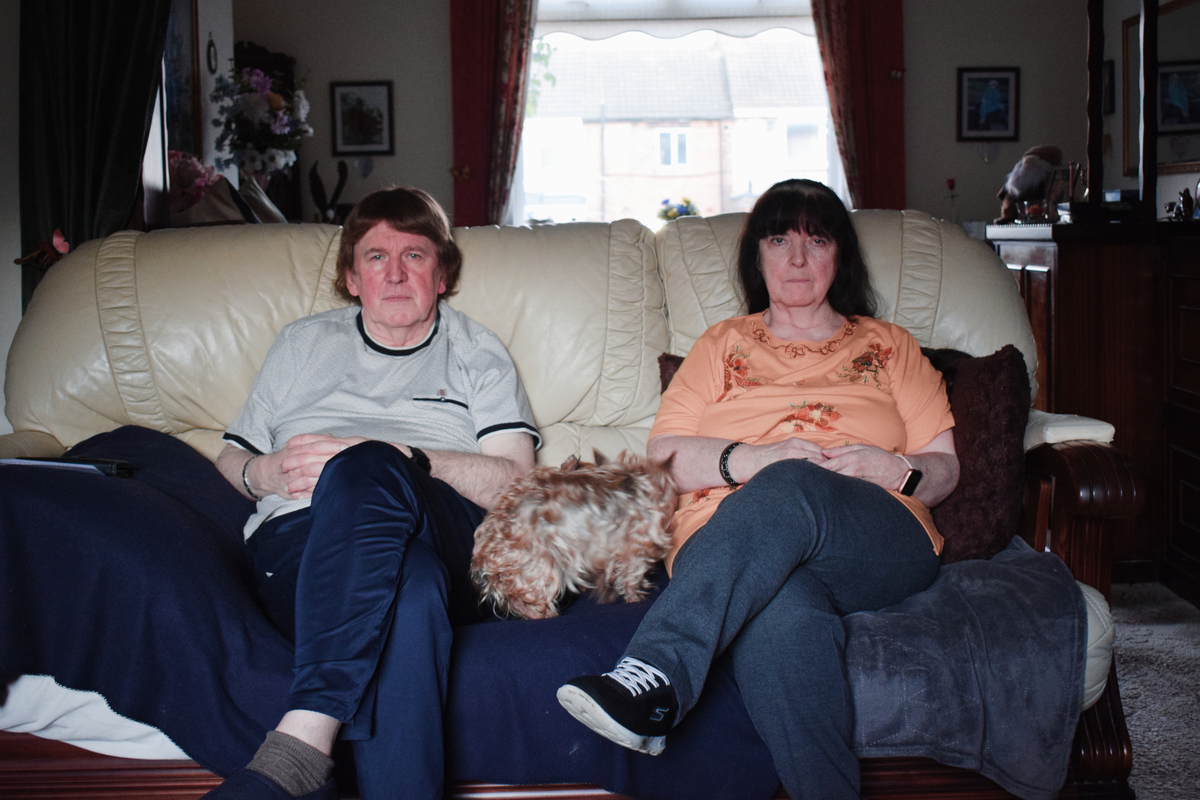
At the start of the 20th century, while the Industrial Revolution was very much still unfolding, new villages sprung up on a thick coal seam along the coastline of East Durham. In theory, there was enough coal to keep the miners working for centuries, and thousands of colliery workers and their families made lives there.
Pip Fallow meets me at Horden train station. His great-grandfather sunk the pit at Blackhall and his father was among the last to ride the cage back up. Fallow was born along this coastline more than 50 years ago, in a time of plenty. Today, he describes it as the worst place in England to be born, reeling off figures about car ownership, home ownership and health from the Mining Remediation Authority.
Life expectancy: eight years lower than the national average. Healthy life expectancy: 53 for men in Blackhall, 51 for men in Horden. In October, new data revealed that only 1% of neighbourhoods in England and Wales are more deprived than Horden.
“The rest of the country is suffering a housing shortage,” Fallow explains. “We've got a tenant shortage.”
Fallow, a campaigner, writer, and builder by trade, speaks with a gravelly voice. He’s dressed in black, his hair still dark, the only splash of colour a cardboard red poppy on his jumper. It’s Remembrance Weekend.
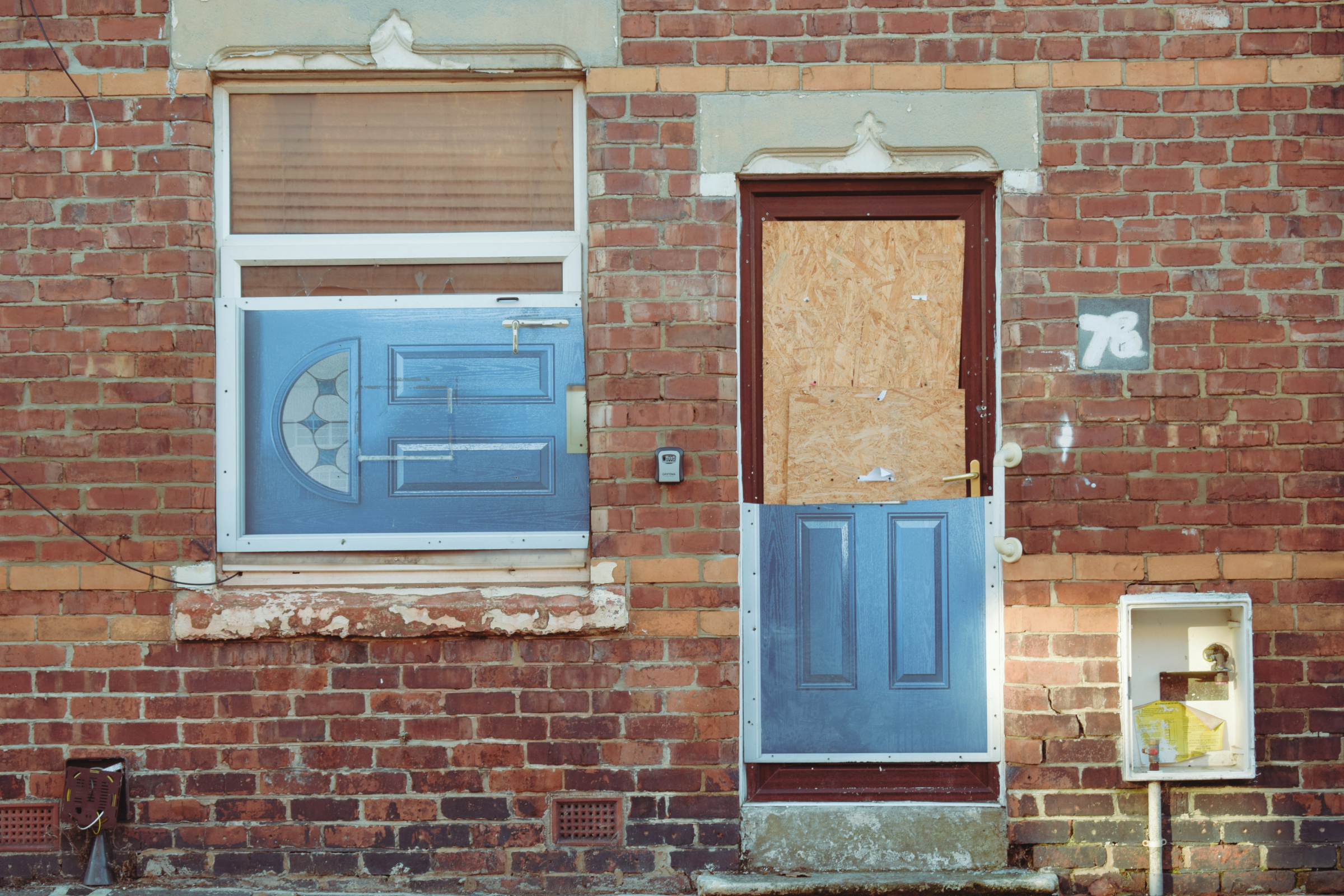
He drives me in his silver Transit up Horden’s Numbered Streets. Depending on what data you’re looking at, anywhere from 18% to 27% of the village’s Victorian terraced houses are vacant. On one side of Fifth Street, every other house is boarded up with TO LET or SOLD AT AUCTION or NO ENTRY: AUTHORISED PERSONNEL ONLY signs outside. Some owners try to disguise the dereliction with brightly coloured images of doors, stapled over bare boards.
“See that window,” Fallow says. “It’s printed on.”
Sometimes these measures have the unfortunate result of highlighting their own artifice. On one house, half a paper blue door has been ripped free, exposing the grain of chipboard underneath.
"It just surprises me how much energy has gone into making it look unconvincing,” says Fallow.
The torn half of the door has then been restuck, sideways, over a window. Further along the street, another window has been covered with a printed image of a broken window, creating a trompe l’oeil of bleakness.
A proposed £10.7 million regeneration of the area will involve demolishing Fifth and Third Street to make way for new homes, using the extra space where the long-since demolished Fourth Street once stood. Though the Horden Masterplan, as it is called, will technically create fewer homes on the whole site than currently exist, with 105 replacing the 110 already there.
“Third Street’s not even the worst,” says Fallow. “The Council has bought 18 houses there and boarded them up. So it's actually the Council that's made it look that bad. Third Street was all right.”
He takes me to the field that was once Horden’s colliery: industrial wasteland, Fallow tells me, “that would be the envy of any county”. The Coal Board sold it to the Council in 1992 for £1. The Proppa Jobs Campaign, which Fallow set up on the back of his memoir of growing up in these communities, has conditionally been granted licences to hawk the land cheaply to companies who might guarantee a percentage of jobs for locals. Fallow envisages data centres on the sites of the old pits, using minewater that gets pumped out of the shafts for cooling, which might then be used to heat offices.
Register for free to read this article.