The forest is an egg. That’s what they say. And the white of the egg is limestone. And the egg is covered with trees which die and break apart and are buried and become the yolk. The yolk is coal and the yolk is black and hard.
In time, the forest was named “Dean”. The toponymy of “Dean” is contested. Some say it hails from the ancient Saxon, “Denu”, meaning valley, or a corruption of the Brittonic “Din” — hillfort. The forest’s playwright, Dennis Potter, called it a fortress, but it was also a hinterland protected by two rivers: the Wye, marking Wales, and the Severn, marking England. In this way it was both England and Wales, while, simultaneously, being neither.
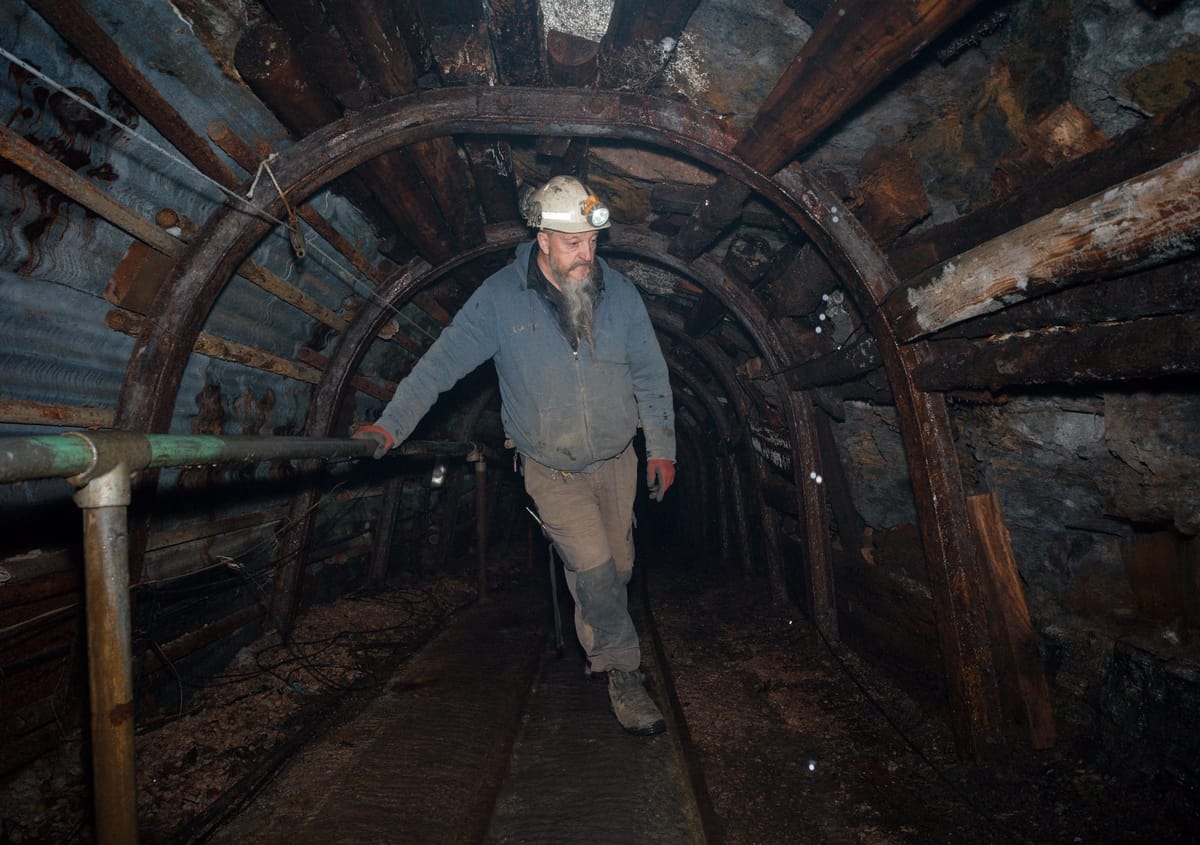
And in the forest there are people, and those people are called “foresters” and, among the foresters, there are “freeminers”.
The prefix “free” in freeminers refers to a dispensation granted only to the foresters by the crown. In the late 13th century, Edward I rewarded them for their military service with exclusive rights to mine coal, iron ore, and other minerals via personal plots known as “gales”. But it wasn’t until 1838 that what it means to be a freeminer was codified in the Dean Forest (Mines) Act.
In order to claim a gale, as is the freeminers’ right, you have to be over 21, born within the Hundred of St Briavels — which is to say, the Forest of Dean — and have worked underground for a year and a day. Non-freeminers cannot claim gales once they become available; instead they have to buy or inherit them. There used to be thousands of freeminers; now there’s thought to be roughly 100. In 2016, the only maternity hospital in the forest was closed, meaning any freeminers born today have to be born at home.
People here mine full-time, or part-time, or whenever they choose. You should never use the “h-word” (hobby) in the Forest of Dean, but freeminers often find a profound sense of liberty in their approach to earning a living. Coal is brought up in the cart, sorted for size, and people come to buy it: sometimes big cars, sometimes blacksmiths, sometimes pensioners. In 2021, the Government made it unlawful to sell traditional house coal in England for use in homes, but the miners pleaded their case to DEFRA and were given an exemption, the only one in the country.
The following are names given to local gales: The Bold Defiance; Go on and Prosper; Invention; Long Looked For; Never Fear; New Found Out; Perseverance; Rainproof; Ready Money; Speculation; Steadfast; Strip-and-at-it; Success; Tormentor; Uncertainty; Winners; and, perhaps most poignantly, Work or Hang.
Robin Morgan was a freeminer. He started in the pits at 15 and died ten years ago, at 80, practically “with his boots on”. “Robbo” was old school. It’s not long before fellow freeminers, Rich and Peg, start to reminisce.
“You wouldn’t wrestle nothin’ off him,” says Peg. “What was ‘is was ‘is. But he was from a different generation, [for them] nothin’ was nothin’.” Robbo was a big, hard man: 6’4” with hands like shovels. For a while, Robbo worked laying kerb stones. These could weigh up to 75kg and Robbo laid them by hand. Apparently, he once laid 565 in one day, roughly 50 an hour, faster than any machine. Robbo used to bag up the telephone at the colliery in case someone broke in to make a long-distance phone call to Australia. He worked up until the day he died of what he assured everyone was a bad back, but turned out to be an aneurysm. If you were lazy, he’d call you a “pisser”.
Register for free to read this article.