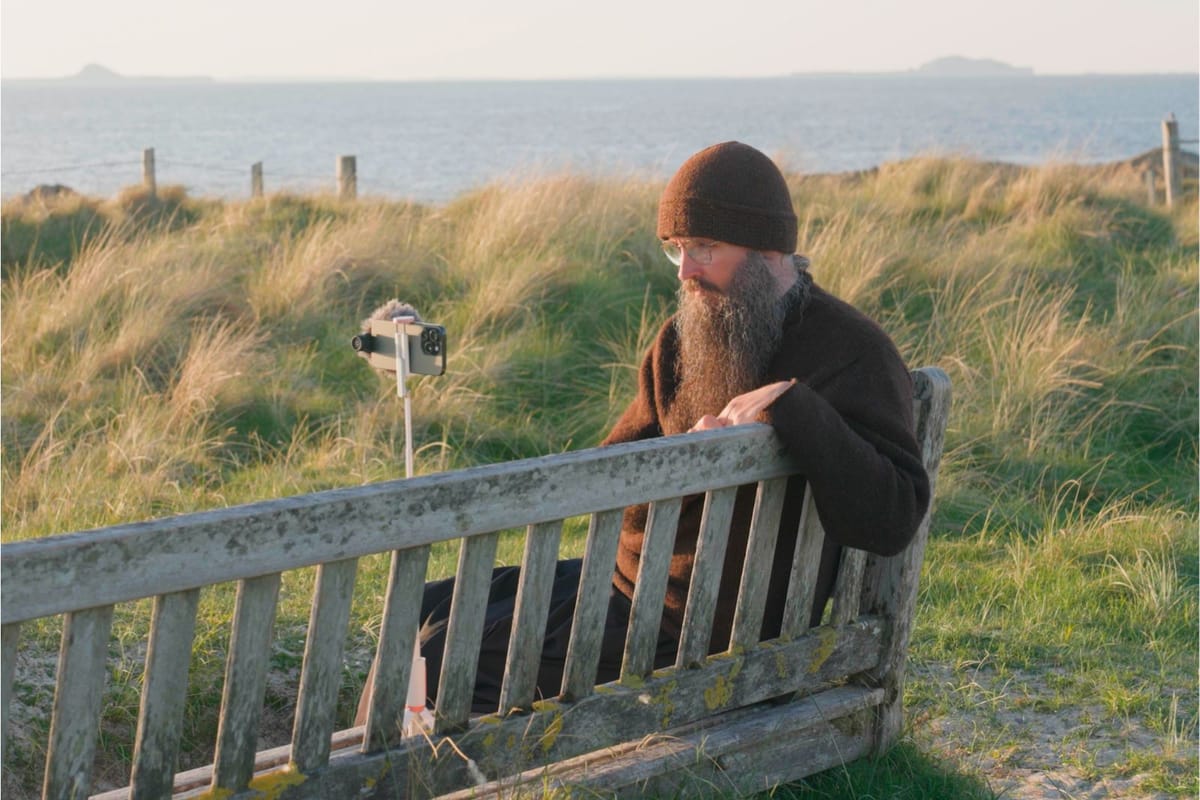
The service is nearing its third hour, but no one shows any sign of tiring. In a small chapel on a rugged island off the west coast of Scotland, the hymns rise and fall, steady as a tide.
Eventually, the priest beckons me forward, holding out a bowl of bread. He is tall, with round glasses and a beard that droops down his torso. His name is Father Seraphim-Oran — and he is leading an Orthodox revival in the ancient home of Celtic Christianity.
“Come here, creature,” Father Seraphim says. “I give this to the ducks and geese, so I can give it to you. You’re almost as worthy as a goose.”
I cup my hands, take the bread, and place it directly in my mouth, careful not to drop a crumb. It’s good to be back.
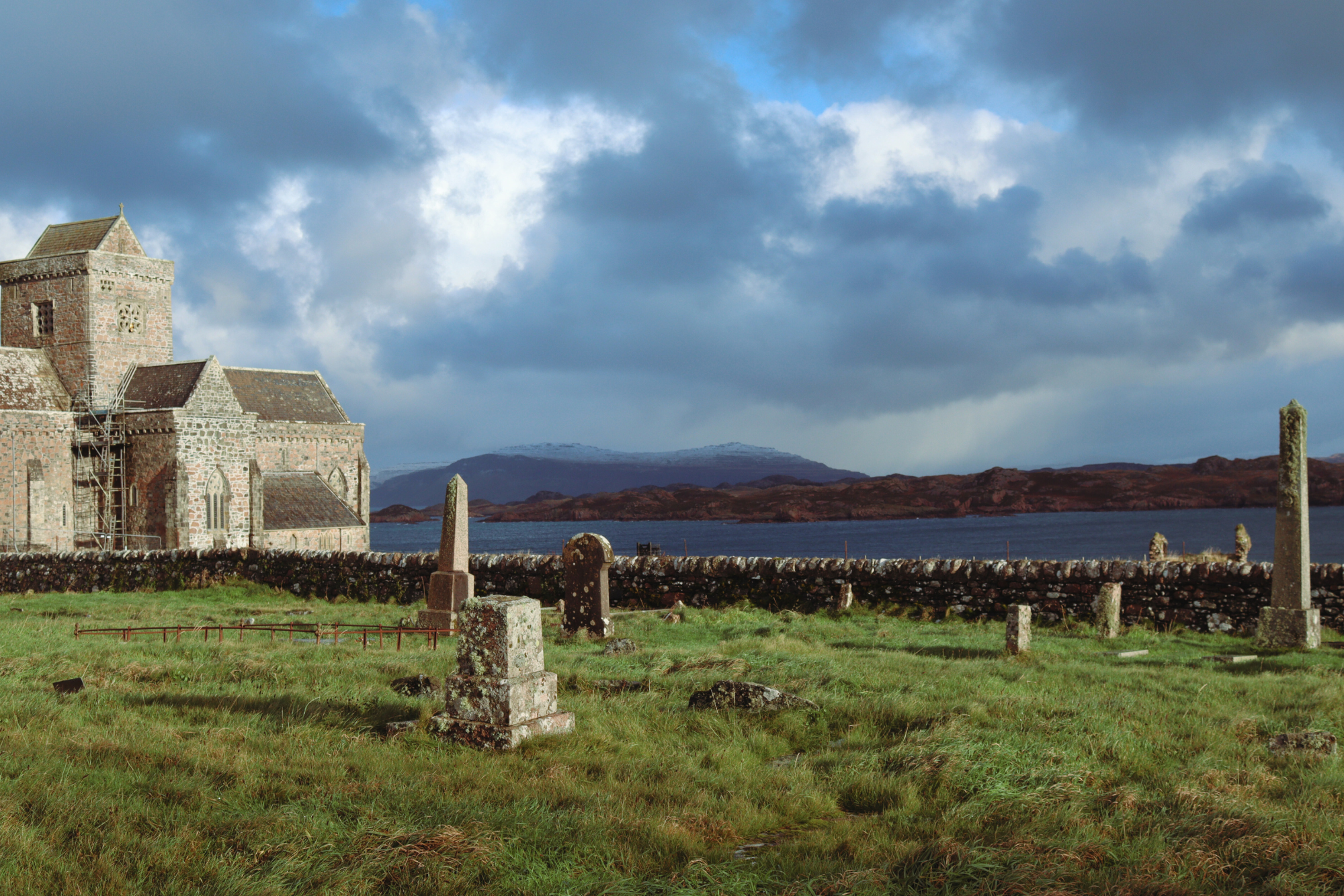
Iona is a tiny island in the Inner Hebrides, separated from Mull by a narrow, often turbulent stretch of water. In summer, its white sand and turquoise shallows briefly resemble the Mediterranean — until an Atlantic storm shatters the illusion.
St Columba, an Irish monk, landed here in AD 563 and founded a Christian settlement that would shape religious life across Scotland and Ireland. For a millennium Iona remained a place of pilgrimage, until the Protestant Reformation snuffed out its monastic life. The abbey was dissolved and its traditions dispersed. Although various groups passed through in the centuries that followed, no monastic community returned permanently.
That is, until 2023, when six men from the newly founded Orthodox Monastery of All Celtic Saints, led by Father Seraphim, took up residence on the island.
Born Leonard-Daniel Aldea, Father Seraphim arrived in England from Romania two decades ago as a poet, to study for a Masters degree in Creative Writing. David Morley, his poetry professor at Warwick who became a firm friend, maintains that the man he calls Leo “will always be a poet first”. Father Seraphim’s monastery and movement, he adds, “are all new forms of poetry he composes, with people themselves becoming part of the work”.
Today, he presides over a community of eight nuns and six monks, living in separate monasteries according to Orthodox tradition, along with a far larger digital flock. When the pandemic severed his ability to travel, he launched a YouTube channel. It now has more than 74,000 subscribers, many of whom support the monastery through donations and pilgrimages. His videos cover everything from exorcism to “the real Christ”, and his audience keeps growing.
That growth mirrors a broader trend. While mainstream Christian churches in Britain have declined by 21% over the past decade, the number of Orthodox Christians has risen by around 5%, to roughly 430,000. Commentators have seized on this, diagnosing a supposed “masculine” turn in the church — and, in America especially, issuing warnings about the rise of the “Orthobro”, a chronically online convert who imports political resentments into a theology they barely understand.
Register for free to read this article.