
When the flood came to Lismore, it catered to believers and non-believers alike. There are photographs of the town’s Catholic church half submerged, a statue of the Virgin Mary standing high on a plinth with the waterline at her waist. In others, the swollen river nearly engulfs a McDonald’s drive-through sign, its yellow arches just visible above the brown floodwater.
Back then, on 28 February 2022, Lismore was almost wiped from the map. If the New South Wales government gets its way, a state-backed effort to remove its final residents will finish the job, leaving a key part of this once-thriving town a shell of its former self.
The rain didn't just pour that day; it cascaded, producing a volume of water unprecedented in the area. The Wilsons River, which bisects the town, rose with such force and speed that it overwhelmed the region’s rain gauge forecasting instruments. The river eventually peaked at 14.4 metres.
People in Lismore are used to floods. For decades, many residents have kept emergency kayaks permanently affixed to their garage walls. But as locals still say: this was a perfect storm.
Residents who had gone to bed believing they were safe woke in the early hours to water surging through their homes. Entire blocks were engulfed so completely that they seemed to have become part of the river itself. Submerged traffic lights became visible only by their red lights, as if signalling that the whole town would not be moving again for some time.
Many locals clung to rooftops waiting for helicopter rescue. Others braved the floodwaters. Five people died. More than 14,000 homes were partially or completely destroyed. Over 80% were left severely damaged or uninhabitable. Power failed. Fuel ran scarce. Muddy sludge coated everything. And still the rain kept coming.
In the aftermath, the New South Wales government encouraged residents to leave and, in the years since, has continued to do so. Around 700 of the town’s 44,000 residents have sold their plots. Others have agreed to have their homes relocated to higher ground, or retrofitted to make them more flood-resistant.
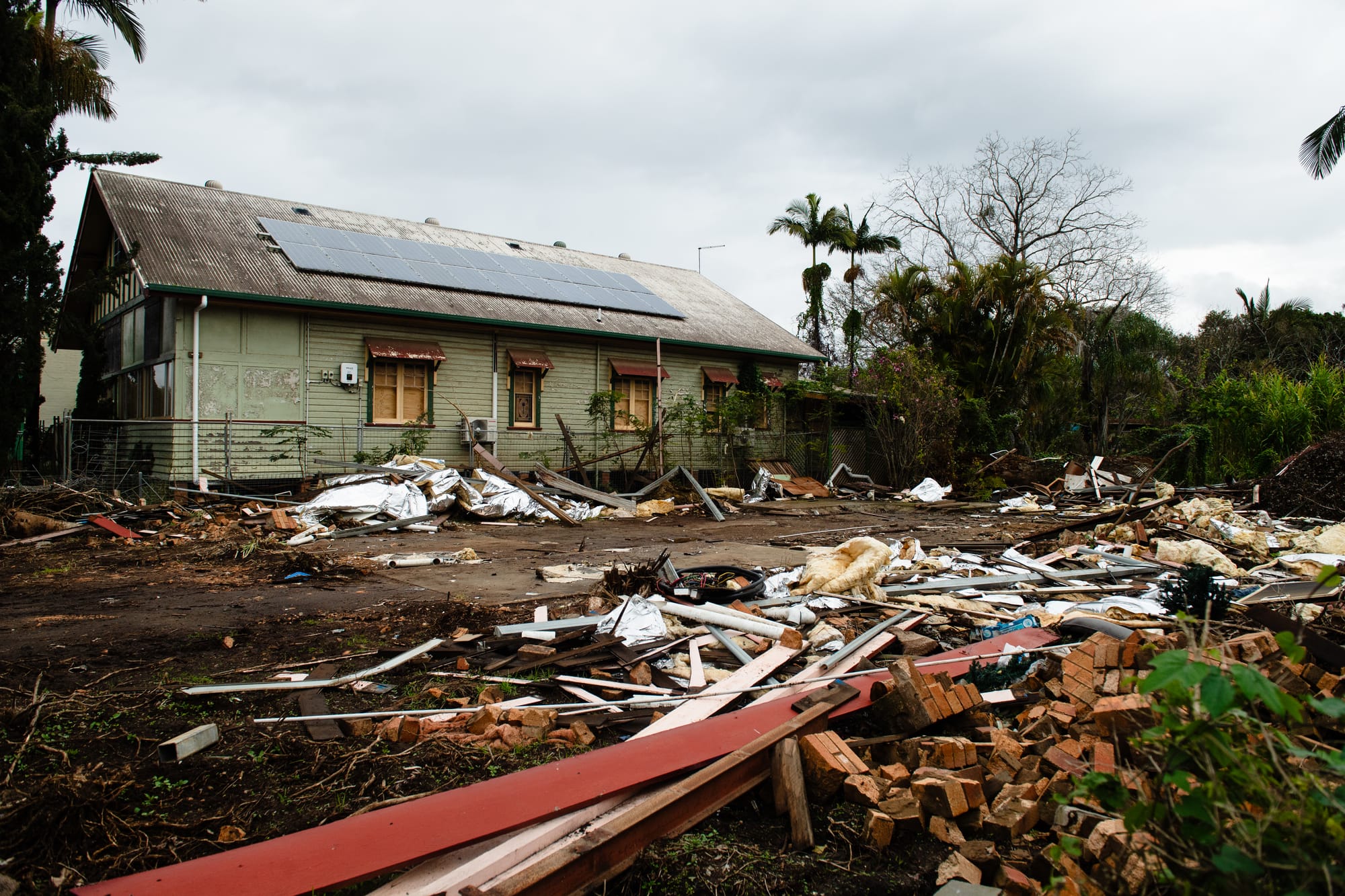
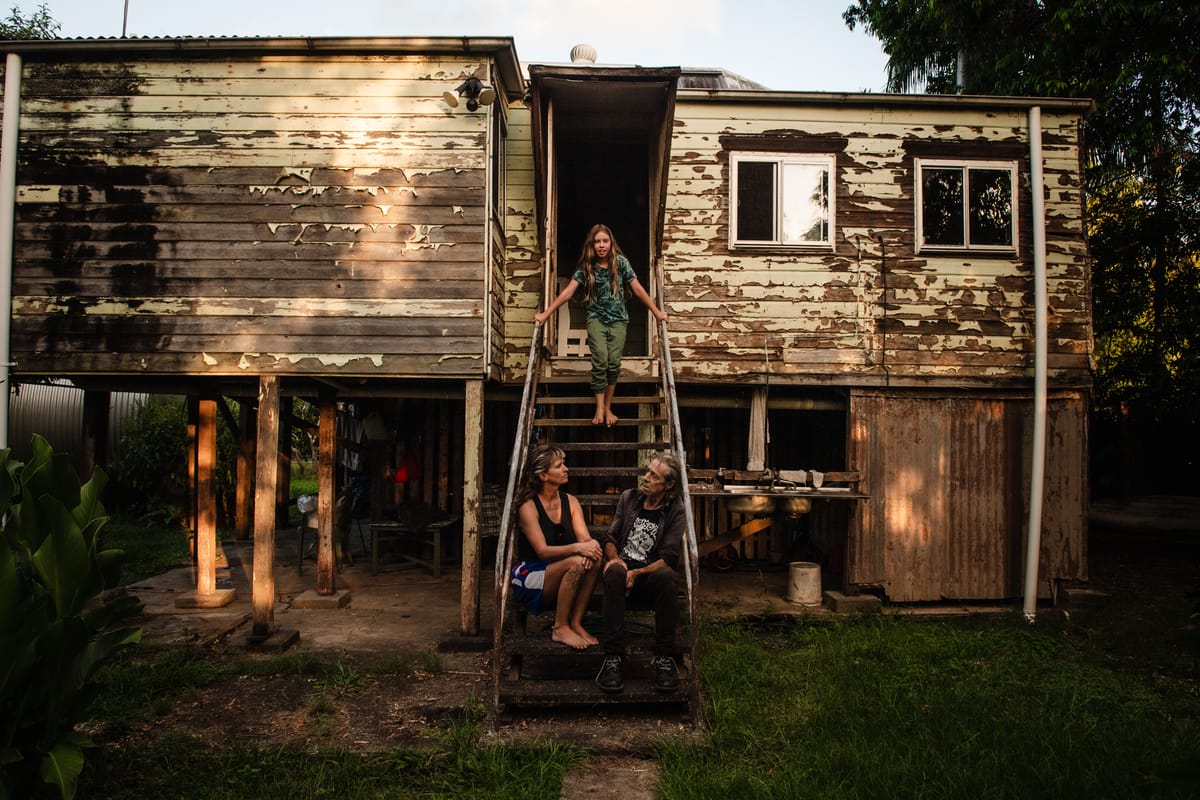
But four years on, a few remain, squatting in the shells of surviving buildings. One of them is Antoinette O’Brien.
When the flood hit, Antoinette was temporarily living in a “Queenslander”, a timber house on stilts common in this part of Australia. Even so, the water swallowed the lower floor and crept upwards, forcing her and her eight-year-old son onto the building’s roof. The house she’s now in is also a Queenslander, and sits in the flood plan. It was initially marked as condemned, like many of the Queenslanders in this part of town.
“We’re like caretakers,” she says. “They’d fall into disrepair if we weren’t here.”
Not everyone is so sanguine about the role of those who stayed. Lisa Sandbrook, one of Lismore's mental-health nurses, sees clients whose PTSD is triggered every time it rains.
So why do people remain? “Family and community,” Sandbrook says. “But there’s a lot of sadness. I hear it every day.”
Lismore sits 734 kilometres north of Sydney, between two of New South Wales’s more mythologised towns. To the east is Byron Bay, once a loose, bohemian outpost of surfers and hippies, now remade as a millionaire’s enclave for the likes of Matt Damon, Natalie Portman, and Zac Efron. To the north lies Nimbin, a small inland village famous for its cannabis cookies, communal living and psychedelic murals.
The irony of being flanked by wealth and spectacle is not lost on Lismore’s residents. Antoinette says that when you drive from Lismore to Byron, you pass through what locals call the “linen curtain” — an imagined boundary separating the two places by class. “The water here looks dirty,” she says of the Wilsons River. “It’s not some pristine blue Australian coastline.”
You'll need to become a paid member to read the rest of this article.
Reports like this demand weeks of research, writing and editing — and our paid subscribers are what make that possible.
But here's the good news: for three months, you can join them by paying £4.95 a month to access everything.