
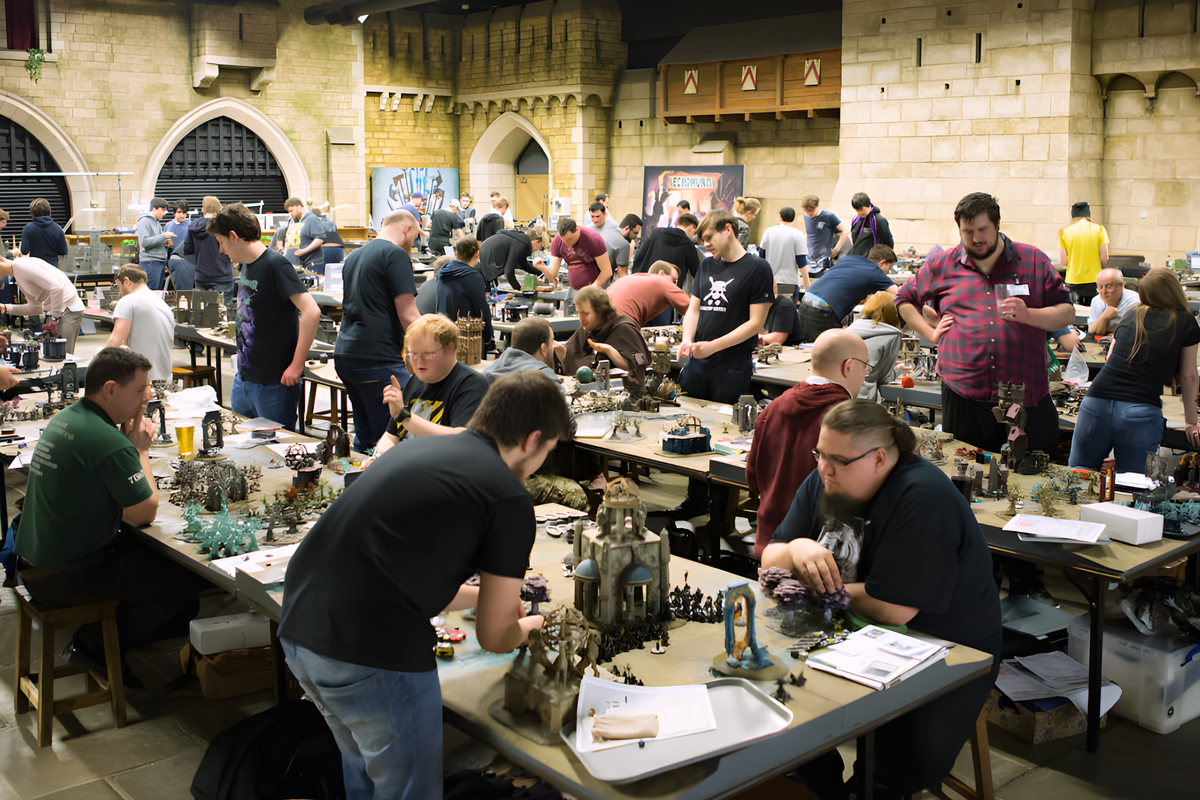
Shortly after Alex Huntley was born, the roof of Bilsthorpe Colliery caved in, killing three men. It was August 1993 and, across Nottinghamshire, pits that weren’t collapsing were being filled with liquid concrete, sealed off for good. In Nottingham itself, the last of the city’s lacemakers were being squeezed out of their factories.
If the industries surrounding Alex’s birth were already in terminal decline, by the time he reached adulthood something else was taking their place. Nottingham, improbably, was becoming a city of war games.
Today, after Boots, the city’s biggest private employer is Games Workshop, the maker of the tabletop phenomenon Warhammer 40,000. Founded in 1975, the company now employs more than 3,000 people across paint factories, plastics plants, design studios, a sprawling headquarters in Lenton, and the jewel in its multi-billion-pound crown: Warhammer World.
Its reclusive chief executive, Kevin Rountree, of whom no public photographs exist, was named The Sunday Times “business person of the year” in 2024. The company’s market capitalisation recently rose above £6 billion — higher than EasyJet, Marks & Spencer, or Manchester United.
Inspired by its success, a dense ecosystem of businesses, freelancers and hobbyists has taken shape across the city, as former employees set up their own international firms. More than 20 local companies are in the business of making figurines, with others dedicated to printing magazines, running painting academies, writing books and developing rulebooks. Locals call it “the Lead Belt”, a nod to the metal once used to cast the figurines.
Register for free to read this article.