
“Our gypsies are stupid. They could at least be crafty but they aren't. They are just primitives and they manage to irritate the entire society which is already watching them closely.”
— Madalin Voicu, a Romani representative in the Romanian parliament.
At some point during the night, Andrei had a dream. He was hurtling along the village road in a powerful car, moving faster and faster, then he crashed into a pylon. He’s still only a child, but, conversely, almost a man.
His grandfather, Neamu, often forgets his dreams. Those he doesn’t forget usually involve getting money for nothing, but the dream ends there because money for nothing doesn’t exist. At dawn, the village shoulders off its dreaming while frenzied animal noises fit over the otherwise solemn hills like a mask.
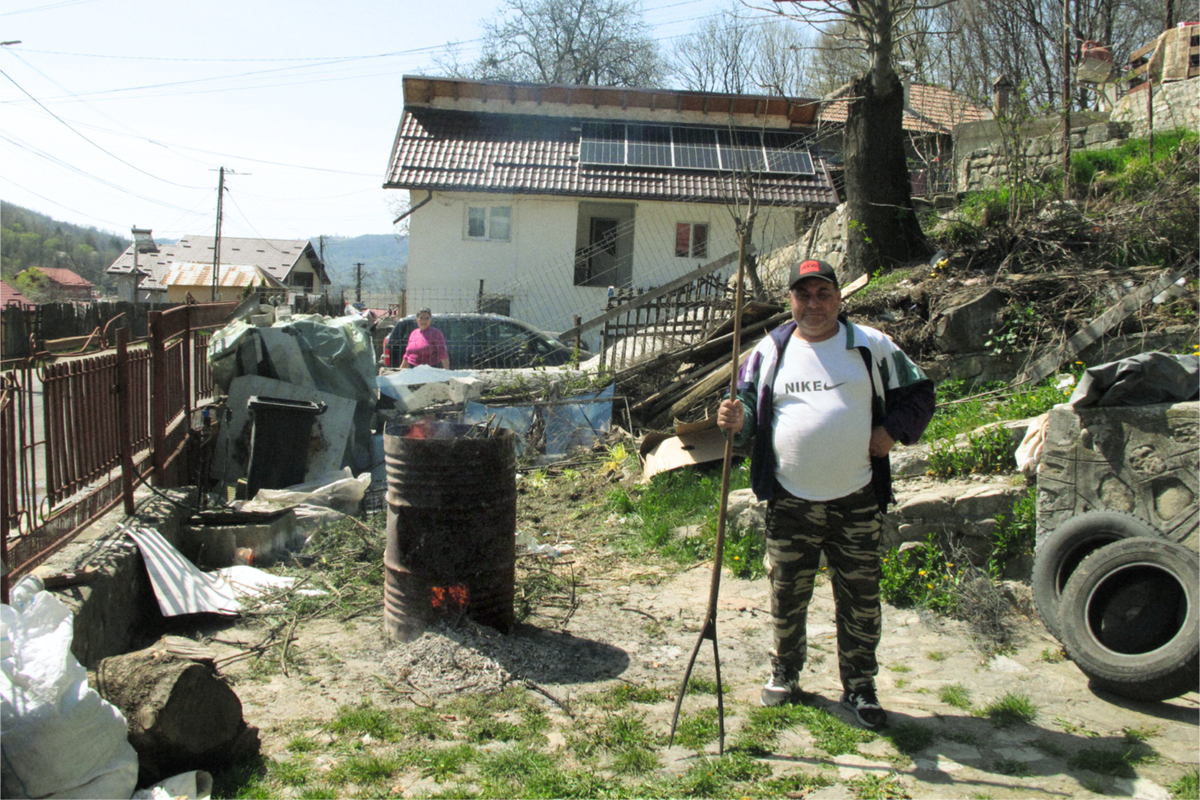
Andrei and Neamu are both residents of a small Roma community in the Southern Carpathians, about two hours north of Bucharest. Generations ago, its inhabitants’ grandparents were nomadic, living in caravans and covered wagons. Before that, they were serfs, enslaved by the nobility. Eventually, a few families settled on the eastern bank of the river and named the village Glod, a colloquial term for mud. That was back in the early 1900s; the exact date changes depending on who you ask.
Down river from the village of mud is the town of cement. Its true name is Fieni but people know it by the enormous Soviet-era cement factory that looms menacingly over the landscape. Cement infuses Fieni: the fences are cement, the old football stadium too. Under Ceausescu, the town provided stable work for the people of Glod, but now the factory is owned by a German conglomerate and employee numbers declined from 7,716 people in 1989 to roughly 800 in 2019. Nestled high in the hills is an old sanatorium, built in the 1930s, where patients with tuberculosis gulp at its good air while bears move in the surrounding trees.
In Glod, people are proud of their heritage, but they’ll also tell you that they’re not like other Roma, by which they mean they work hard. Work is fundamental in Glod; work means money and money means a living. Neamu does whatever he can. In the run-up to Easter, he weaves baskets with his wife, Gica, and whittles spoons with little smiley faces carved into them. His neighbour works in the forest cutting and transporting lumber. In the winter, the temperature drops to -10°C and the work is hard and depressing. Everyone has learned to live with the dogs who wander, semi-domesticated, from house to house. If a visitor is disliked, the dogs will chase them away. We arrive in Glod around 4pm, in the glow of afternoon.
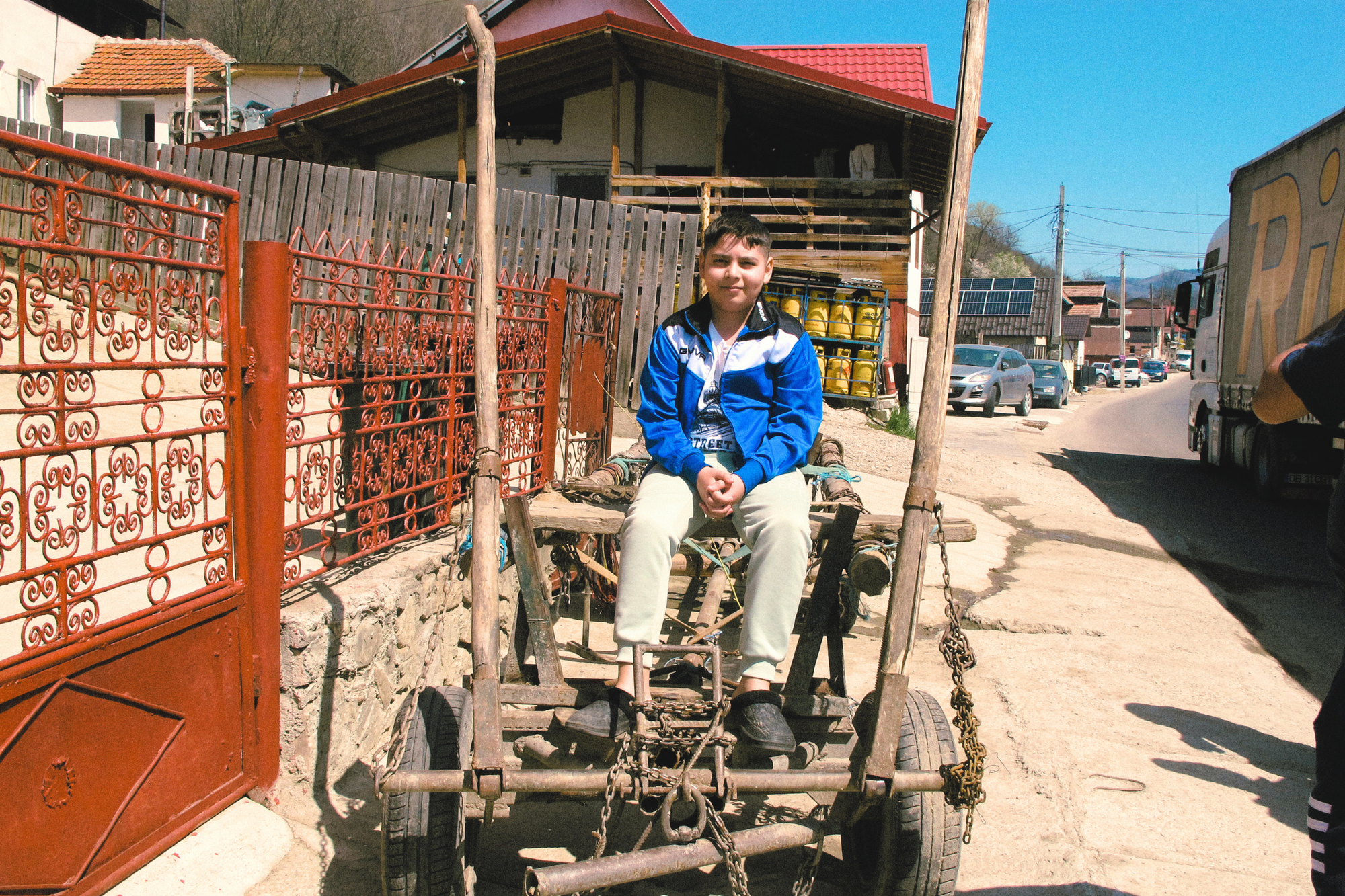
Presently, people begin to arrive and accost us about money. Little Andrei, 11, speaks a small amount of TikTok English but not enough to translate. He gets bored and begins shadow boxing the fence. He’s had some lessons; you can tell by the way he exhales as he releases each punch. Soon there’s a chaos of children and adults. A van rolls past selling apples and bananas followed by a convoy of absurd traffic: horses; dust-covered, spluttering Dacias; teenagers, four to a single bike.
Neamu, 51, wants money for the interview. We eventually agree to return the following day with sunflower oil and polenta and sweets for the children. It’s not something I’d usually do but this is Glod and the villagers have been burned before, 20 years ago, by a mysterious man named Borat.
The Ciorobeas are one of the more prominent families in Glod. Spiridom Ciorobea was the village mechanic. His parents were among the first to settle in Glod and lived to over 100 years old. Spiridom had 11 grandchildren, two daughters and two sons.
This is not a paywall!
To read this rest of this article, register for free.