
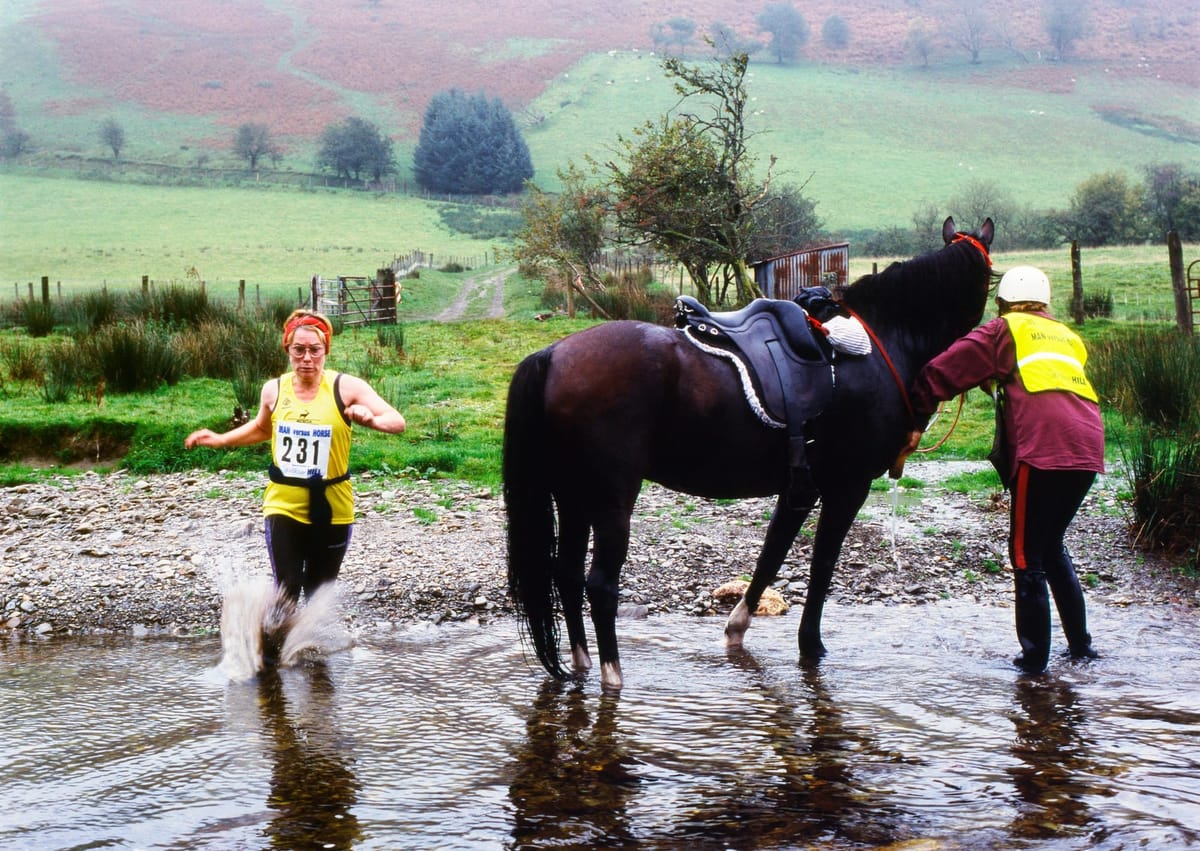
McCall Weibel has finished both the Chicago and Salt Lake City marathons, but she has never run in a race against 60 horses. Ahead of her 40th birthday, she decided to remedy that. The Utah native flew to London and booked a three-hour Uber to a tiny town in mid-Wales, arriving £250 lighter to try her chances in Llanwrtyd Wells’s “Man v Horse marathon”. The gruelling contest takes runners, horses and riders across valleys and up 1,300m of elevation.
“I've never run with horses before,” says McCall, outside the town hall as she arrives to register for the race. “It'll definitely be a unique experience.”
Lining up alongside McCall are Robin and his two friends, who have driven across England and Wales after catching the ferry from the Hook of Holland to Harwich. Angela has travelled from Switzerland to mark her 50th birthday. Tony and Rob, from Liverpool's Penny Lane Striders, are attempting the race for the 19th time. Together, there are more than 700 runners signed up to test their two legs against four.
Barring a couple of barren Covid years, the race has been an annual fixture here since 1980. Llanwrtyd Wells, which bills itself as Britain's smallest town, has built a reputation on such eccentric pursuits. Every summer it hosts the World Bog Snorkelling Championships, in which competitors splash through a flooded peat bog. There is also the Real Ale Wobble, which sends half-cut mountain bike riders around forest trails.
On the weekend of the Man v Horse Marathon, the town swells from a population of about 800 to thousands, with barely a bed spare in the tiny mid-Wales outpost. Asked whether local traders appreciate the events, Stan, who runs the local corner shop, says: “All the traders do. We look forward to the events and the upturn."
Each of the quirky events traces its origins to one man: Gordon Green, a local who pioneered wacky competitions as a way to bring tourists into town to keep his ailing pub and hotel business alive. His ideas were also ripe for the attention economy, and the town has since monetised Britain’s love of the folksy and quirky with a burgeoning roster of off-kilter activities.
On top of the snorkelling and wobbling, in 2012 Green came up with the World Alternative Games — which featured finger jousting, hay bale tossing and wife carrying — when he noticed Wales was getting little upside out of the London Olympics. Speaking to the FT in 2023, he said: “We never bothered to ask the council to do anything because they didn’t have any money, and they didn’t seem to want to get involved in tourism. So, we tended to do everything ourselves.”
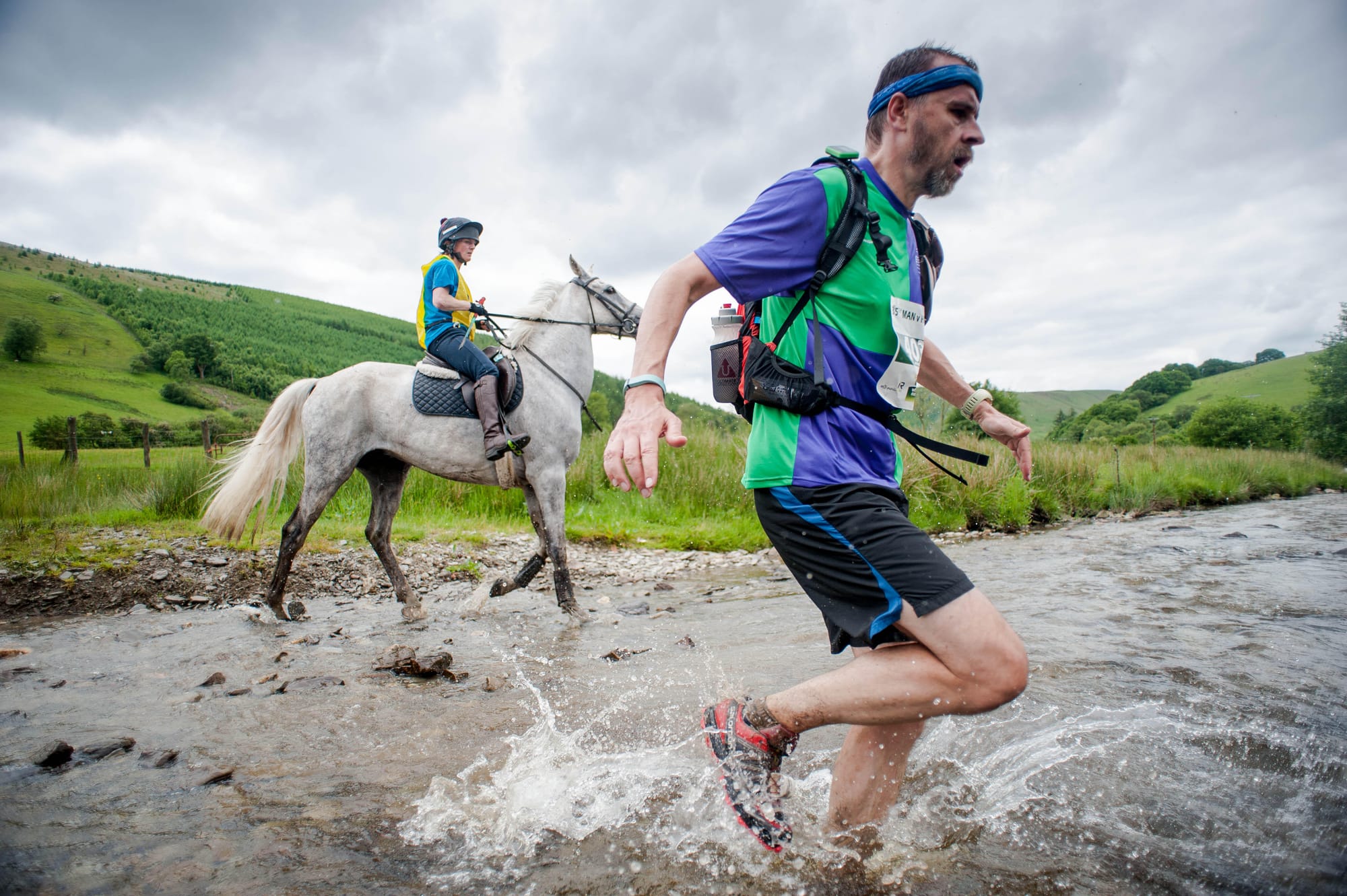
The marathon itself was founded in Green’s pub, The Neuadd Arms, which sits off the roundabout that makes up Llanwrtyd's town centre. The official story is that it began with an argument in the back bar. Glyn Jones, a local huntsman, insisted no human could ever beat a horse across rough Welsh terrain. Green disagreed.
The legend of the 18th-century Welsh athlete Guto Nyth Brân, who was reputed to be able to run so fast he could catch hares and foxes, also played a part. Green reckoned others might be able to live up to the stories told about Guto, so he put it to the test. If that brought tourist money into town, then all the better.
Horse beat man for the first 24 years of the competition, until Huw Lobb became the first athlete with two legs to win in 2004. He claimed a £25,000 prize, which had been rolling over since the race’s conception. Since then, four others have managed the feat, including three of the previous four editions.

You'll need to become a paid subscriber to read the rest of this article.
But here's some good news...
Our summer sale is live, making it the perfect time to join!