
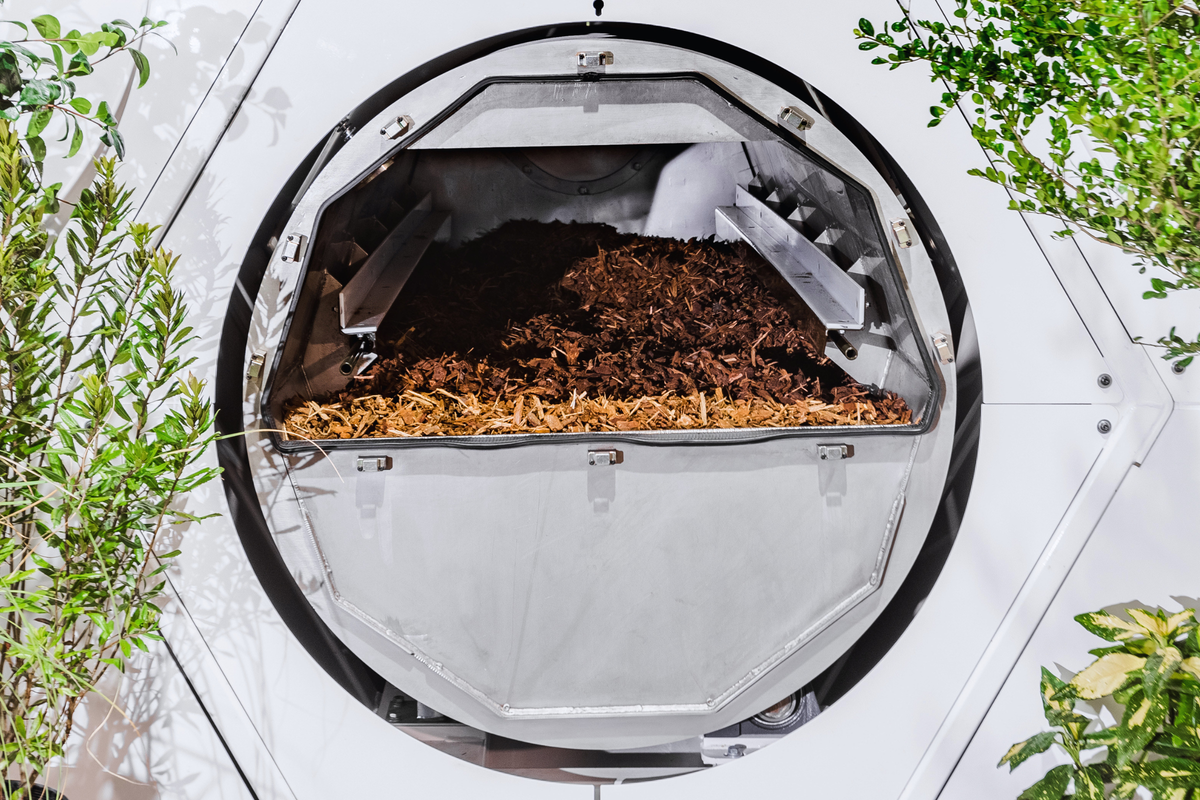
It takes around 60 days to turn a human body into compost.
The process is surprisingly simple. A body is placed inside a sealed vessel, covered with straw, alfalfa and wood chips, and left for bacteria and microbes to do what they’ve always done: return flesh to soil. The remaining bones, which break down more slowly, are later ground into a fine powder and folded back into the mixture. After another month of what practitioners call "curing", you’ll be left with a cubic yard of dark, fertile compost — more or less enough to nourish a small garden.
“You can have a massive party and give everyone a cuddle bag of compost,” one advocate told me. “You can be growing trees and parsnips for decades.”
Most of us don’t like thinking about what should happen to our bodies after we die. When the moment comes, our families are generally left with two options: burial or cremation. Yet burial is becoming increasingly expensive as cemetery space disappears, particularly in cities such as London. For most people, cremation has become the default.
This, however, presents problems of its own.
For one, the conveyor belt nature of modern cremation has been the recent cause of a number of lost ashes scandals. There’s also the sheer energy required for a cremation. A standard gas-powered cremation emits as much as 540 pounds of carbon dioxide alongside a whole lot of pollutants, equivalent to a 500-mile car trip. It may not sound like a lot in the grand scheme of things, but it would cancel out most of those hours you spent separating your recycling while you were alive.
That is partly why, last month, the Law Commission recommended creating a regulatory framework for new methods of body disposal. At present, only burial, cremation and burial at sea are explicitly recognised in England and Wales. In Scotland, things are slightly more advanced. In March, Holyrood legalised alkaline hydrolysis, sometimes called “water cremation”, which uses water and alkali instead of flames and produces a fraction of the emissions.
Another, more radical possibility is human composting, sometimes marketed as “terramation”, a term trademarked by an American provider called Return Home.
“If you can compost a cow, you can certainly compost a human being," says Katrina Spade, an architect turned funeral reformer based in Seattle. Spade, 48, first began thinking about the idea 15 years ago while considering her own death. “I don’t want to be cremated. It feels a bit wasteful. I don’t want to be buried either, especially the way Americans do it with embalming. I want something that feels environmentally beneficial, but also meaningful.”

You'll need to become a paid subscriber to read the rest of this article.
But here's some good news...
Our summer sale is live, making it the perfect time to join!