
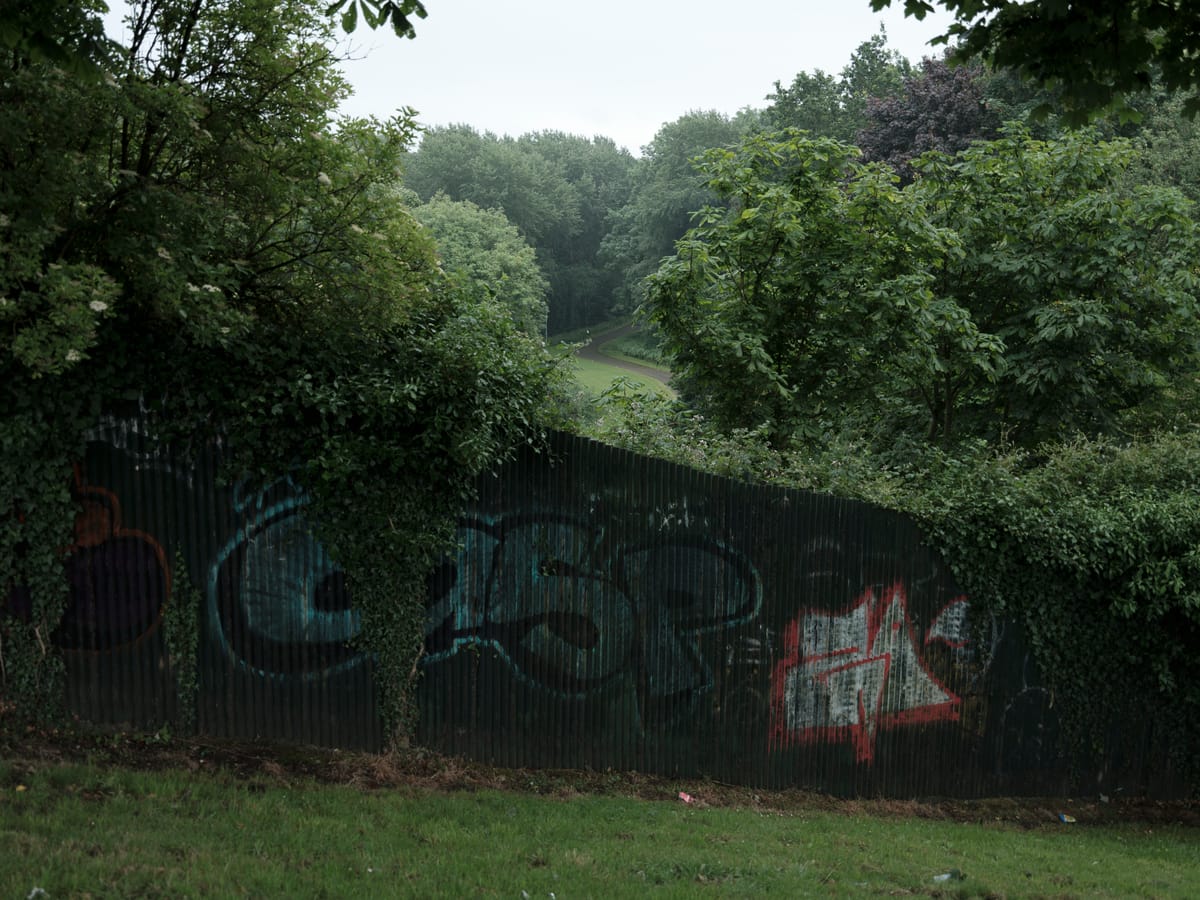
On 30 August 1994, amid news that the IRA was preparing to end its armed campaign, Belfast poet Michael Longley wrote what would become his most celebrated poem. “Ceasefire” recounts the final scene from The Iliad, in which a grieving King Priam persuades Achilles to return his son’s body. After describing several ceremonial exchanges of respect between the men, Longley concludes with Priam’s thoughts as he makes his plea: “I get down on my knees and do what must be done / And kiss Achilles’ hand, the killer of my son.”
The following day, the IRA announced a ceasefire that was celebrated as the beginning of the end of a three-decade conflict that robbed half the population of someone they knew. The day after that — not 24 hours after this historic step toward peace between Protestants and Catholics — workmen in north Belfast’s Alexandra Park laid the foundations for a ten-foot-high, 120-foot-long wall designed explicitly to separate them.
Alexandra Park straddles an invisible line. To its west, the streets on the lower slopes of Cave Hill are populated by the nationalist communities of the Antrim Road and the New Lodge estate. To its east, the lowlands between those slopes and Belfast Lough are home to the unionist Shore Road and Tiger’s Bay. There is a mutually-recognised boundary between the two, and it bisects Alexandra Park.
During the Troubles, this situation turned the park from a bucolic Victorian pleasure garden into a hotbed of sectarian rioting. The solution eventually enacted in 1994 was a “peace wall”, as any infrastructure physically realising an ethno-nationalist border in Northern Ireland became known. The ceasefire only lasted two years before being ruptured, reinstated and eventually ratified by the Good Friday Agreement in 1998. But the wall is still there today.
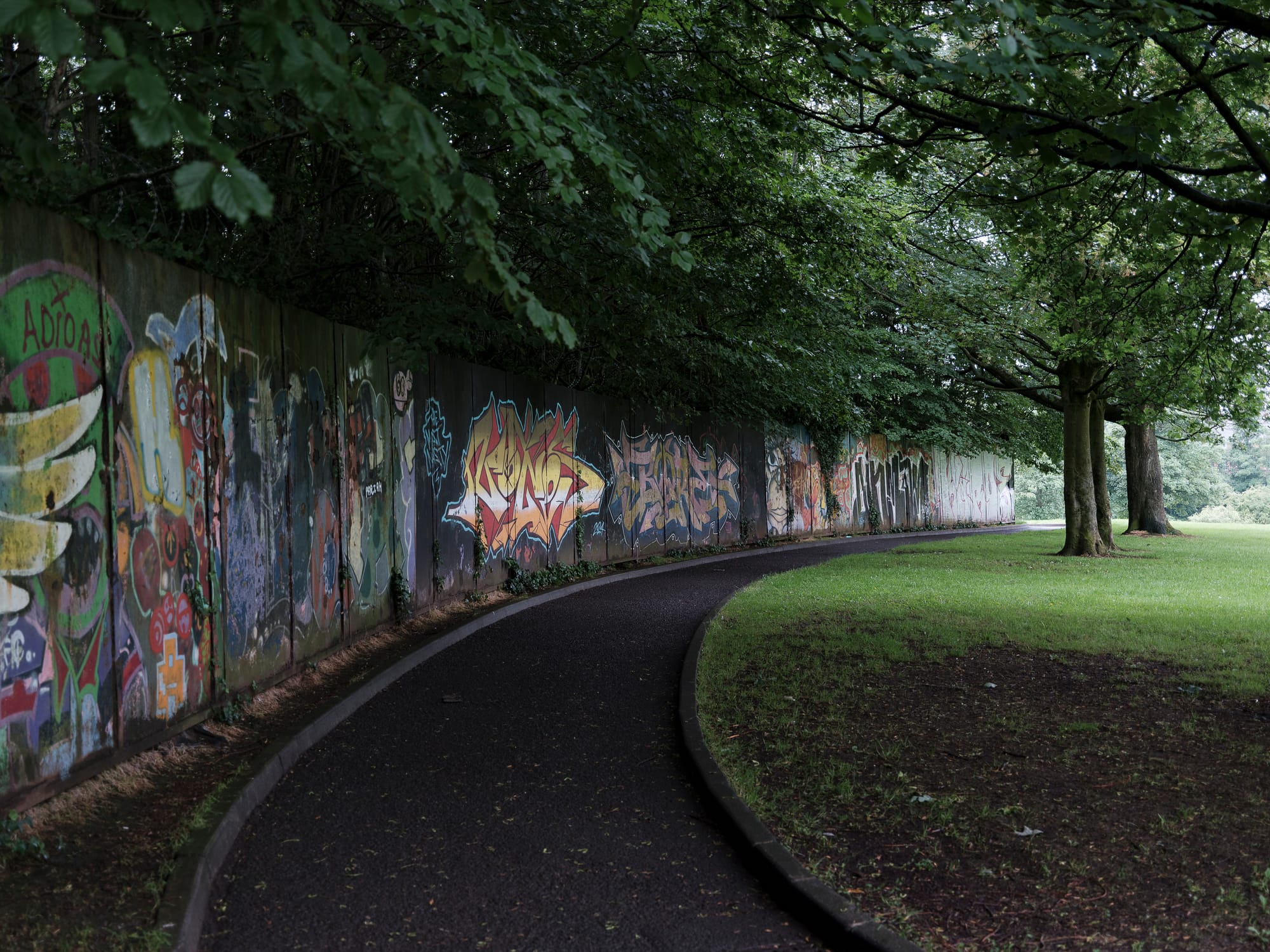
It wasn’t the first peace wall built in Belfast, and it wouldn’t be the last; depending on how you count them, there are up to 100 today, the largest and oldest of which is now so deeply incorporated into the iconography of West Belfast that it’s become a tourist attraction adorned with written messages from around the world. But Alexandra Park’s was and still is the only one — in Belfast, Northern Ireland or indeed Europe — that splits a public park in two.
This is not a paywall!
To read this rest of this article, register for free.