
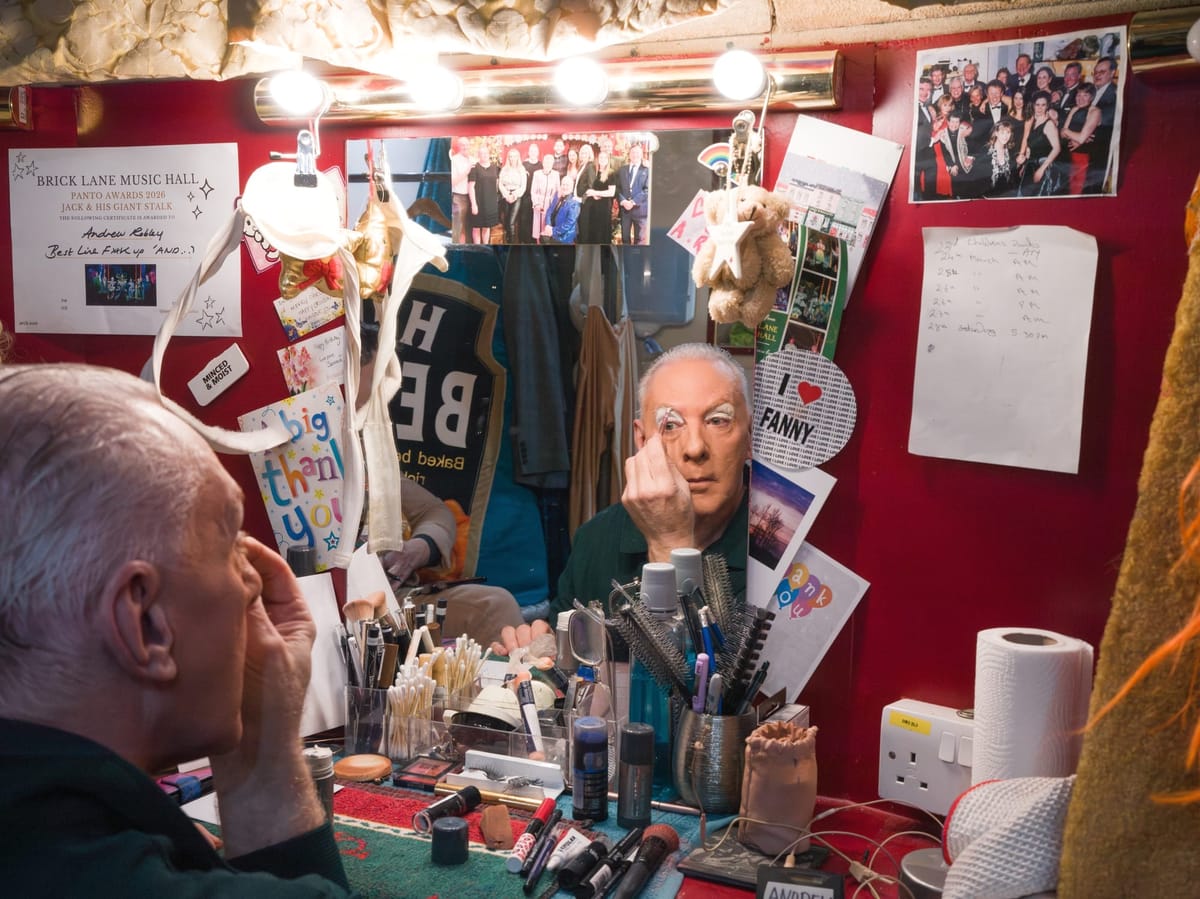
To visit Brick Lane Music Hall, the UK’s last remaining permanent venue dedicated to the art of music hall, is to enter a screamingly camp, chandelier-lit, maximalist alternate universe. On arrival, one encounters, in quick succession: a life-sized stuffed bear wearing a crimson bowler hat and an oversized bow-tie; a number of glass display cabinets featuring eye-catching dresses; and a pair of scarlet velvet theatre seats whose accompanying plaque clarifies they come from Leeds, “the City of Varieties”.
Those areas of the walls not already claimed by intricate Christmas decorations — it is, incidentally, March — are covered with posters from historic bills and hundreds of meticulously hand-painted signs, all in a naughty, end-of-the-pier, how’s-yer-father register. They range from punning notices for the toilets (“The Cistern Chapel: Let Us Spray”), to faux old-timey adverts for Pratt’s Patent Starch (“Keep Your Dicky Stiff”) and the Silvertown Stimulating Sauna & Sporting Club (“Tel: Silvertown 6969. Ask for Norma Stitz”).
But Brick Lane Music Hall is not merely a museum. It prides itself on being a working music hall, offering performances throughout the year, including The Best of British Variety, St Patrick’s Irish Music Hall, Summertime Music Hall, and an annual adult pantomime — all accompanied by afternoon tea or a three-course lunch, with full table service.
On the Wednesday afternoon of my first visit, it is a sold-out house. Excited theatregoers are slowly making their way to cabaret-style seats and tables. A bus-load of 74 pensioners has travelled in from the village of Sawston in Cambridgeshire. A pair of women towards the front have ordered a bottle of champagne, which arrives chilled in an upturned top hat.
Then the musicians take to the pit, and the lights dim. It is time for this afternoon’s performance of James and his Giant Stalk.
At its peak, music hall was arguably Britain’s most popular art form. Emerging from the taverns, coffee houses, pleasure gardens and song-and-supper rooms of eighteenth and early-nineteenth-century Britain, it offered audiences the chance to gawk at singers, comics, dancers, acrobats, magicians, animals, and novelty routines, all while eating, drinking and generally carousing (participation was actively encouraged).
It was a popular, populist medium: looser, rowdier and more accessible than “legitimate” theatre, though ratified and licensed as a professional discipline in its own right by the 1843 Theatres Act. Its rise was spectacular. By 1875, there were hundreds of music halls in London alone, creating a professional circuit, and making stars of performers including “The Queen of the Music Hall” Marie Lloyd and 4ft 6in comedian Little Tich, who was known for dancing in absurd giant flipper-like shoes.
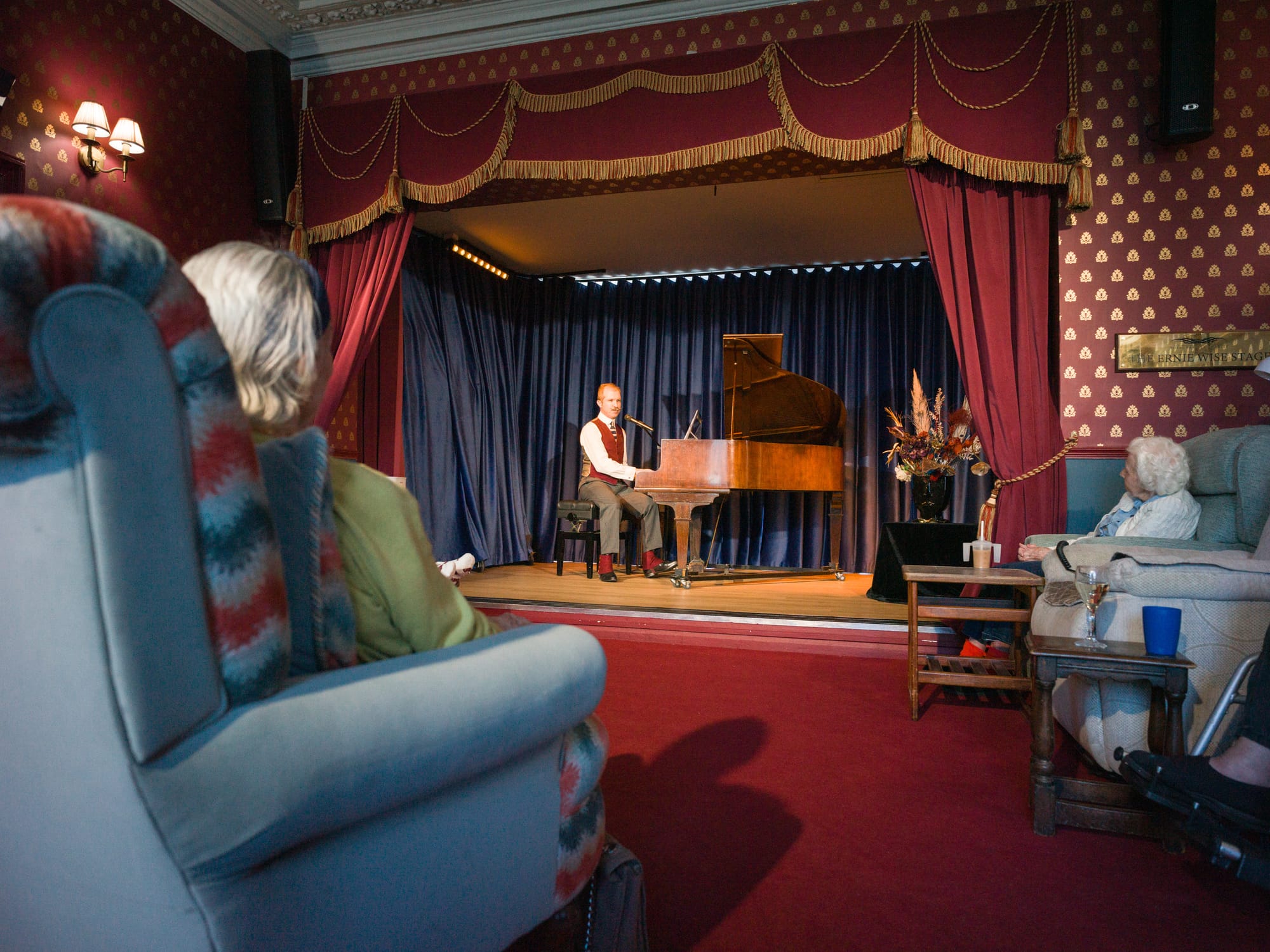
And then there was the “concert party”, first developed in 1891 by banjo virtuoso Clifford Essex after seeing a group of French Pierrot clowns perform mime at The Prince of Wales Theatre. Struck by their visual elegance, he created his own troupe clad in white satin, pompoms and ruffles. His Pierrot Banjo Team, which debuted at the Henley Regatta, was an immense hit and spawned hundreds of imitators. Soon, rowdy blackface minstrel shows — then the seaside entertainment of choice — had been usurped by whiteface Pierrot troupes. By the 1920s, more than 500 companies were performing seasonal acts across the coasts of Britain.

You'll need to become a paid subscriber to read the rest of this article.
The good news?
Our summer sale is live, making it the perfect time to join!