
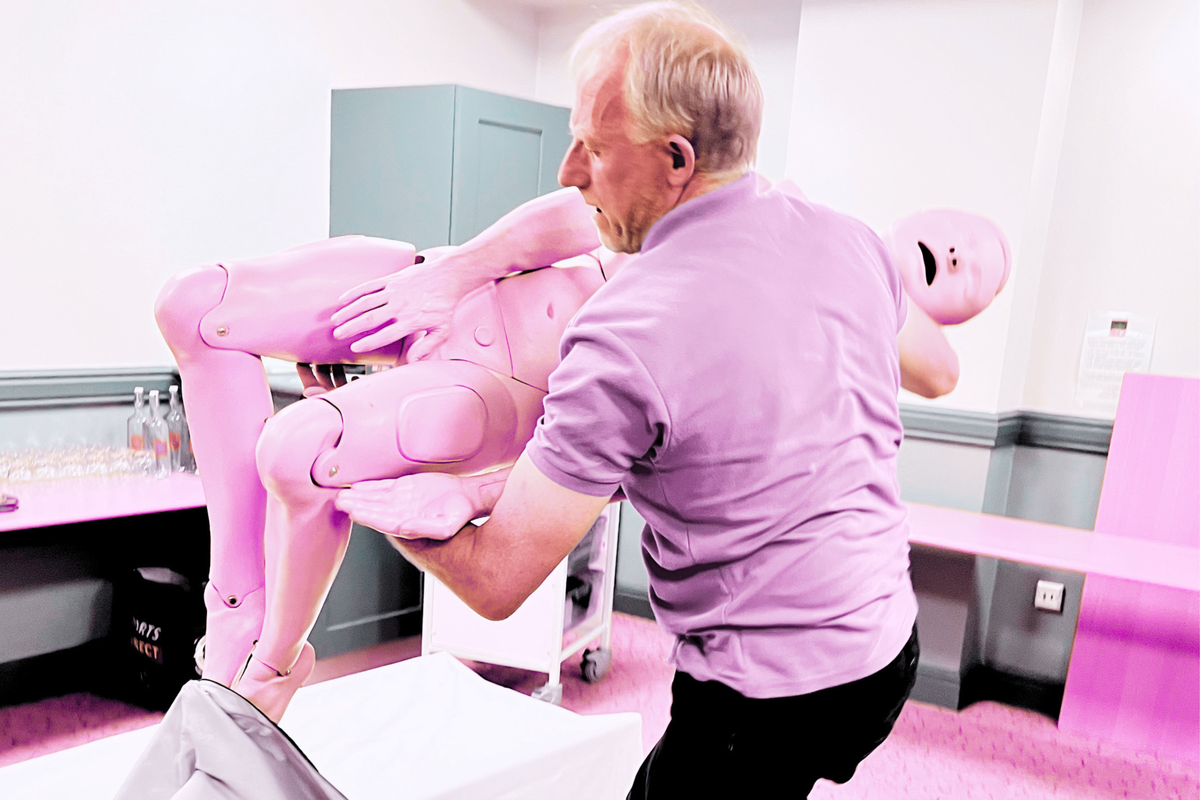
On a mild autumn morning, in a hotel conference room in Sheffield, a dozen people are learning how to prepare a dead body for its possible resurrection. Their patient is Lincoln, an adult-sized dummy. Their instructor is Tim Gibson, a volunteer who has spent much of the past three decades attending deathbeds across Britain and, on occasion, as far away as Malta.
Among those attending is Garret Smyth, a property manager who, 40 years ago, became the first person in the UK to sign up for cryopreservation at the Alcor Life Extension Foundation in the United States. After he is legally declared dead, he intends to have his head cooled to −196°C and stored in liquid nitrogen at Alcor’s facility in Scottsdale, Arizona. There it will remain, in the hope that science will eventually find a way to bring him back.
“I don’t want to die,” he says. “I mean, it's funny when you say it out loud. Look, nobody wants to be dead. I think people give up too soon.”
Smyth has chosen neuropreservation, which aims to preserve the brain rather than the whole body. The hope is that, one day, the person it contains might be revived, memories intact, in a new and fully functioning body.
“If the technology and science progress, the way one is hoping, they will be able to replace every organ,” he explains. “The only thing they can’t replace is your brain — that’s what makes you, you.”
Smyth would prefer to have some company when that day comes. A founding member of Cryonics UK, a non-profit organisation established in 1991, he has spent years mixing with fellow cryonic enthusiasts. He regularly attends its training sessions, where prospective patients learn what will happen to them after death, and volunteers practise the procedures intended to give them the best chance of another life.
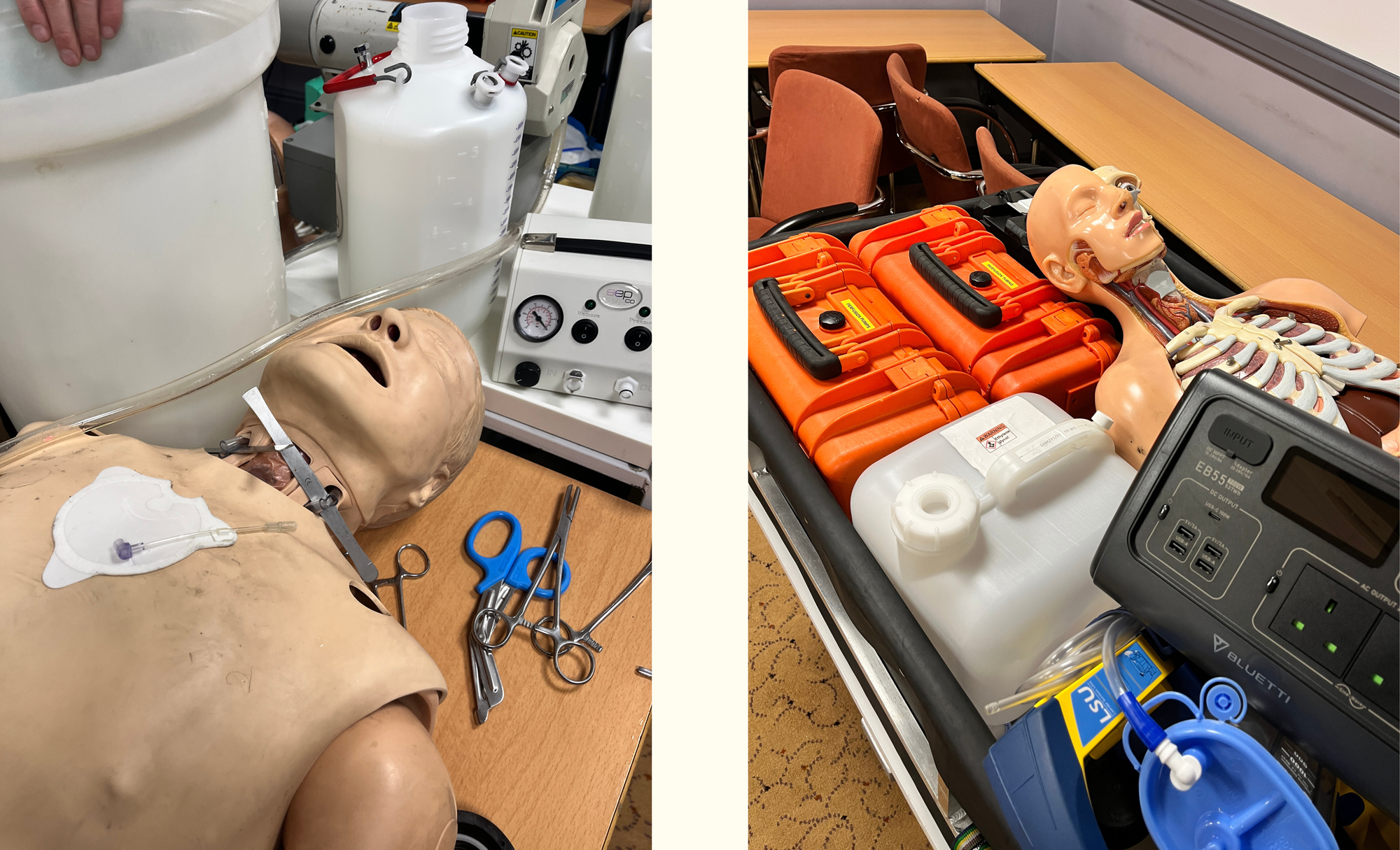
His colleague Gibson, who is leading today’s session, first became interested in cryonics at around 19, after watching a documentary on the subject. Although he has no medical background, he has spent the past 28 years helping to prepare bodies for preservation. He considers it “mathematically inevitable” that those now in suspension will eventually be revived.
The people gathered in Sheffield have varying degrees of confidence. Some have already made arrangements, often taking out life insurance to cover the cost. Others have come to refresh their training, see friends or satisfy their curiosity. They come from a range of backgrounds, though men outnumber women. Attendance is free.
“I’m here to understand what happens to us,” says Arthur Lister, an 88-year-old retired lecturer from the Derbyshire Dales who worked for the NHS. “We are shown what happens and then we do it ourselves so that we have a better understanding of the initial processing stages before the body is transferred to the US.”
When it comes to preserving a body, speed matters. Gibson explains that cooling should ideally begin within minutes of the heart stopping. The body is placed in an ice bath, while chest compressions maintain circulation to help protect the brain.

To unlock the rest of this article, become a paid member — with £5 off your first three months!