
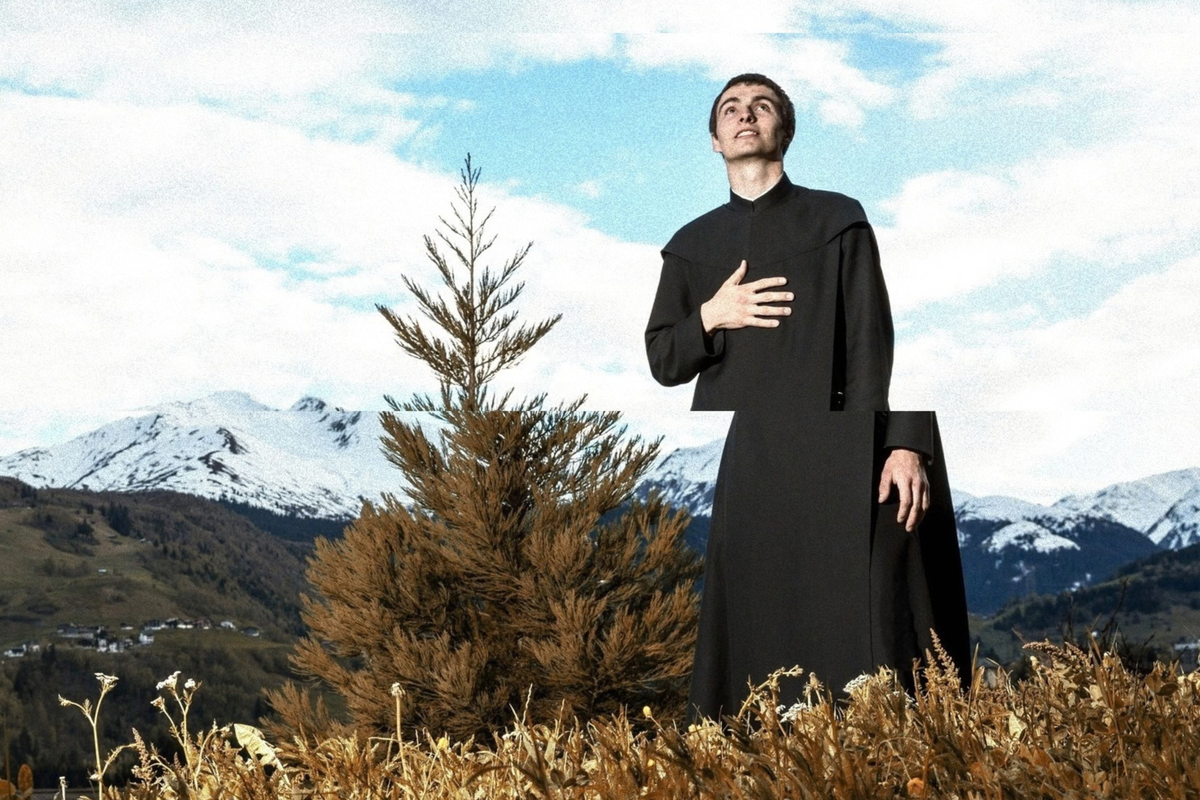
“In 15 years, I’ve had around 200 people come here saying they wanted to become monks,” Fr Luigi tells me. “You can count on one hand the number who stayed longer than a week.”
Dressed in flowing black robes, Fr Luigi is the Spiritual Director of Montecassino, the Benedictine abbey perched high above Italy's Liri Valley. Founded in AD 529 by St Benedict himself, it is widely regarded as the birthplace of Western monasticism, the monastery whose spiritual framework shaped the religious, intellectual and cultural life of Europe for centuries.
It is a tranquil place. From the terrace, the land falls away into the mountains of Lazio. Bells echo across the valley.
Yet beneath that calm lies an anxiety shared by monasteries across Europe. Montecassino has survived Lombard invasions, earthquakes, Napoleon's armies and the Allied bombardment of 1944, when the abbey was almost entirely destroyed. Today, the monastery faces a more existential threat: it is running out of monks.
This is a problem limited neither to Montecassino nor to the Benedictine Order as a whole. Across Europe, many of the continent's great monasteries are watching their remaining communities grow steadily older while the stream of young recruits slows to a trickle.
One of Fr Luigi's jobs is to meet the handful of men who still come knocking, hoping to discover whether monastic life is really for them. He has not had an easy time of it.
“People see pictures on social media,” Fr Luigi says, “but when they arrive, they discover they don't actually like the lifestyle. Our ora et labora is balanced, and until relatively recently was considered mild, but in the modern age a lot of people just can’t handle it.”
Ora et labora — prayer and work — lies at the heart of the Rule of St Benedict, the sixth-century guide to monastic life that governs everything from prayer to daily wine intake to buying robes. It was designed to be spiritually demanding without being physically punishing. As the historian David Knowles has written, St Benedict created not “a penitentiary nor a school of ascetic mountaineering”, but “a family and home of those seeking God”.
Unlock the rest of this article by becoming a paid member — with £5 off your first three months!