
The crowd assembled on the steps of the Senedd knew they were witnessing history. They craned their necks towards the parliament entrance, their red dragon flags fluttering across Cardiff Bay. Then Rhun ap Iorwerth emerged.
It was 9 May, and Welsh politics had reached a moment many had spent their lives waiting for. For the first time in more than a century, Labour's dominance had been broken. Plaid Cymru, the left-leaning nationalist party, was poised to take power.
For decades, Welsh politics had often felt like an afterthought, overshadowed by Westminster and constrained by the limited powers of devolution. Now, the prospect of an independence referendum no longer felt entirely hypothetical.
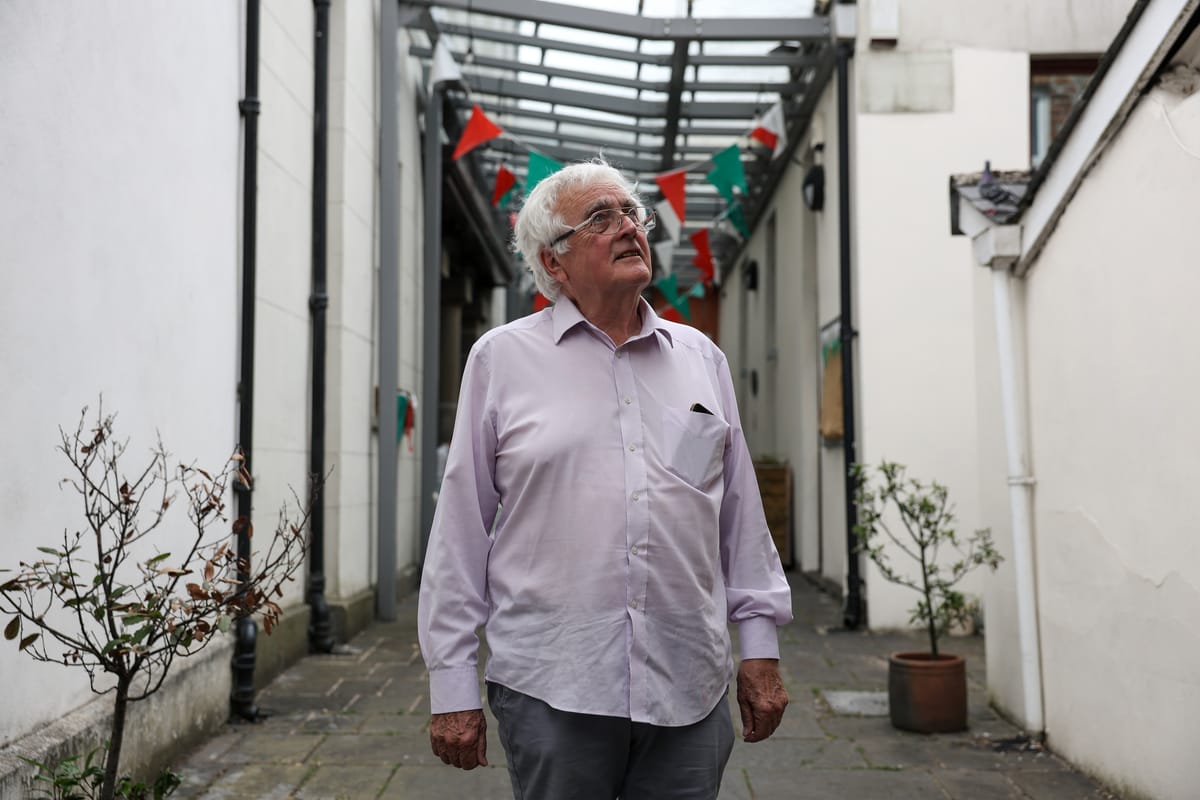
“It’s a tectonic moment,” said Geoff Leyshon, 80, a veteran campaigner for Welsh self-rule. “It's unbelievable.”
Wearing a T-shirt bearing a tribute to his late friend, the rugby commentator Eddie Butler, Geoff shuffled through the crowd as ap Iorwerth urged supporters to remember those who had done the “hard yards for Wales and aren't here to see this moment”. Some of those hard yards are well known. Others are not.
The road to this moment ran through decades of constitutional campaigning. But it also passed through a forgotten militant tradition of bomb plots, clandestine training camps, hundreds of arson attacks on English-owned holiday homes, and even a bombing campaign aimed at disrupting the investiture of a future king.
As ap Iorwerth turned towards the waiting television cameras, Geoff joined the crowd in song. His voice belonged to one of the last surviving foot soldiers of the Free Wales Army.
It was 1967 and Geoff was an undergraduate at Swansea University when a moustached man in a green paramilitary uniform, complete with peaked cap and white eagle insignia, strode into the students' common room. Julian Cayo-Evans, known simply as Cayo, was a charismatic horse breeder, accordion player and self-styled Welsh revolutionary. A decade earlier, he’d fought as an infantryman against guerrillas waging their own war of independence from the empire, in what would become Malaysia. Now he was fighting for an independent Welsh republic.
“Who wants to join the Free Wales Army?” Geoff remembers him asking. “Costs half a crown, and you are expected to die.”
Cayo grinned, and the room burst into laughter.
You'll need to become a paid member to read the rest of this article.
Reports like this demand weeks of research, writing and editing — and our paid subscribers are what make that possible.
But here's the good news: for three months, you can join them by paying £4.95 a month to access everything.