
At the end of the 1949–50 academic year, colleges across America produced much the same kind of yearbook. There were photos of football teams and dances, earnest messages from college presidents, private jokes that now seem quaint. Students posed beside the names of hometowns they had left behind. Most of them would grow old, and the yearbooks would end up on shelves and in attics, opened occasionally by grandchildren trying to recognise the young faces of people they had only ever known as elderly, distant figures.
The 1949–50 yearbook of the Colorado State College of Education has had a rather different fate.
Now the University of Northern Colorado, the college keeps that year’s edition in a small collection of its own. People return to it not for the homecoming game, nor for the forgotten hijinks of that year’s graduating class. Instead, most of those who peruse the yearbook now are looking for one of the 45 international students pictured inside.
He was dark-haired, with a neat toothbrush moustache, and, at 43, was considerably older than his fellow graduate students. His time in Greeley, Colorado, appears to have been unremarkable enough. A campus newsletter recorded his meeting with the college president, Dr William R. Ross. The literary journal, Fulcrum, published one of his short stories.
He had come from Egypt to study American methods of education. His name was Sayyid Qutb.
Four years later, Qutb was arrested in Egypt. In 1966, he was convicted of plotting the assassination of Egyptian President Gamal Abdel Nasser and hanged. In the years between, he became one of the most influential Islamist thinkers of the 20th century, producing work that would later inspire Osama bin Laden and other architects of global jihad.
But before the prison cell and the execution, before al-Qaeda, there was Greeley.
Qutb spent less than a year in this small city. What he encountered there — its churches and dances, its lawns and young women, its prosperity and peculiar American freedoms — appalled and fascinated him. He came to see Greeley not as an obscure town on the Great Plains, but as a glimpse of what was wrong with America itself.
In the essays later collected as The America I Have Seen, he describes a nation characterised by “primitiveness” in morals and taste, a nation ruled by “the rude power of the mind and the overwhelming lust for sensual pleasure”, a nation that, when “the book of time” closes, “will have added nothing, or next to nothing, to the account of morals that distinguishes man from object, and indeed, mankind from animals”.
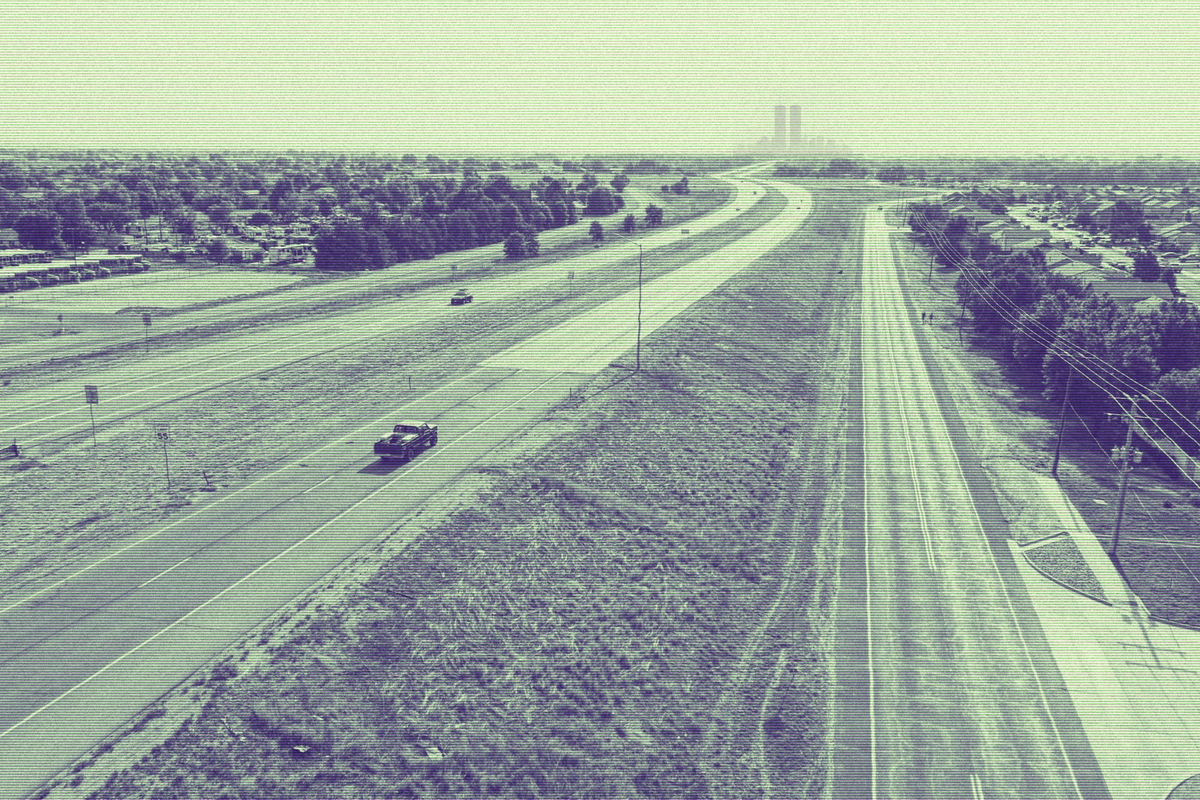
Twenty-five years after his ideas helped to inspire the attacks of 9/11, I went to Greeley to see what he had seen, what had changed, and what America was and is.
Shortly after his arrival, Qutb described Greeley as “so beautiful that one may easily imagine that he is in a paradise”. In this respect, at least, he was seeing the town much as its founders had imagined it.
Greeley began as a utopian experiment. In 1869, Nathan Meeker, the agricultural editor of the New York Tribune, travelled west from New York in search of somewhere to build a new kind of community. He had previously been a member of the short-lived Trumbull Phalanx in Ohio, inspired by the French philosopher Charles Fourier’s vision of small, cooperative agricultural societies.
You'll need to become a paid member to read the rest of this article.
Reports like this demand weeks of research, writing and editing — and our paid subscribers are what make that possible.
But here's the good news: for three months, you can join them by paying £4.95 a month to access everything.