
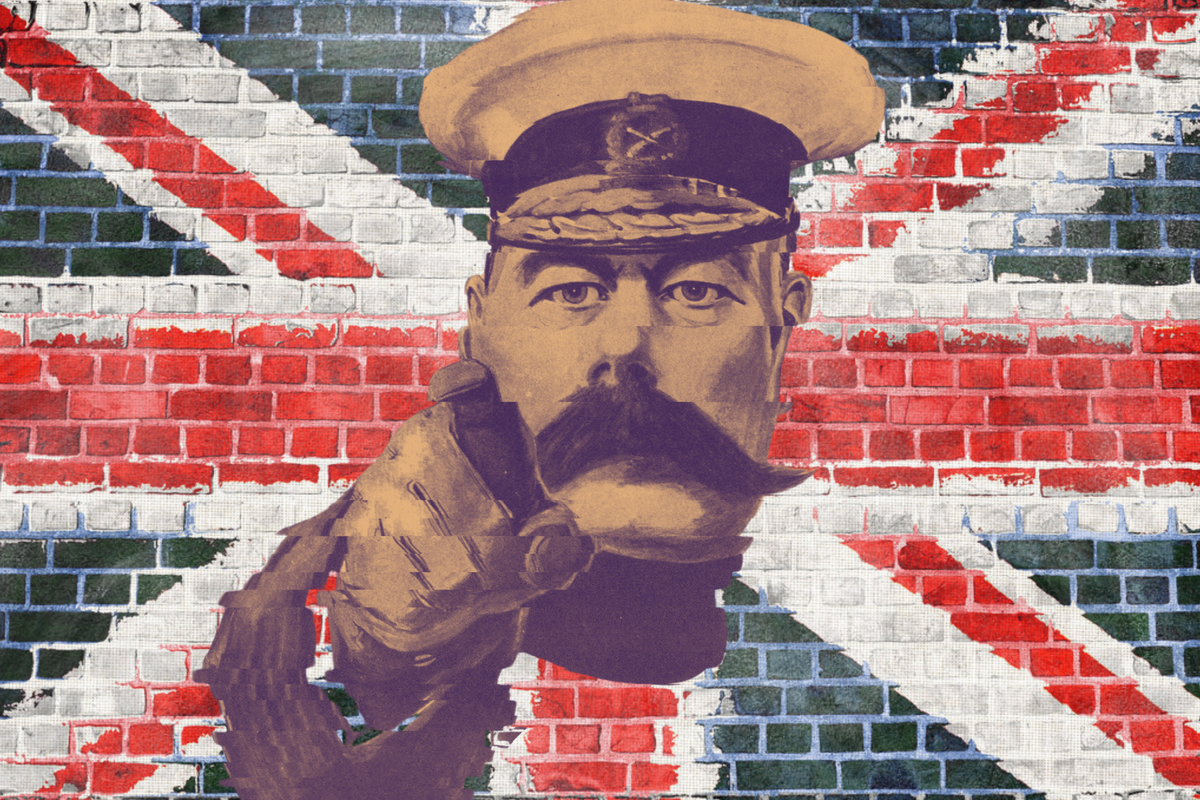
Last year, the anthropologist Professor Mark Maguire found himself journeying across Britain in search of a demographic of young men that no longer seemed to exist. For hundreds of years, recruitment to the British Army could be traced to certain towns and estates — sometimes even to single families — that bred a lineage of men who would march and salute and die for their country. Now, it would seem that all it had taken to end this martial tradition was two decades of life in the 21st century.
“What we are dealing with is a hauntological phenomenon," Maguire recently told me, as we spoke about his work on the war on terror and its effect on recruitment. “If you can find these people, then let me know.”
There are only a few parts of the world renowned for their fighting men. The hundred miles that stretch from the former mining communities of County Durham to the Scottish border can claim to be one of them.
The army’s oldest regiment was founded in Coldstream, a Borders town on the River Tweed, which drew men from Newcastle, Middlesbrough and Sunderland. Dan Jackson, in his history of Northumbria, devotes an entire chapter to documenting how its reputation on the battlefield, from Waterloo to Normandy, can be traced back to the nearby coal mining villages and streets of Sunderland. An officer who joined the Northumberland Fusiliers in 1916 gives the gist: “They are virulent, callous about the dead, and jeer at effete southerners.”
That mythos looms large to this day. A recent Ministry of Defence briefing on its 12 “focus locations” of recruitment revealed that the first three were in the North East, despite the region accounting for just 4% of the UK population.
This time, despite Starmer insisting that Britain “must be ready for war”, the North East does not appear eager to answer the call. Recruitment in the area has already fallen by 40% over the past decade. To help hit targets, there are plans to lift caps on Commonwealth soldiers from places like Ghana and Fiji.
The desperation for squaddies is not unfounded. Last year, according to the local MP, the entire city of Sunderland, which boasts the largest Remembrance Day service outside of London, sent just ten people into the British Army.
Friday night in Sunderland has the desolate joy of an off-season seaside resort. In the centre, outside a theatre advertising “An Evening With Sam Allardyce”, a karaoke bar is full of revellers shuffling and bobbing like caged hens. Outside, its lights cast a lurid glare over two homeless veterans in camo fatigues sitting next to a Victorian fountain. If I want to find army men, they tell me with sardonic and drunken glee, I should go to The Gunners Club.
Register for free to read this article.