
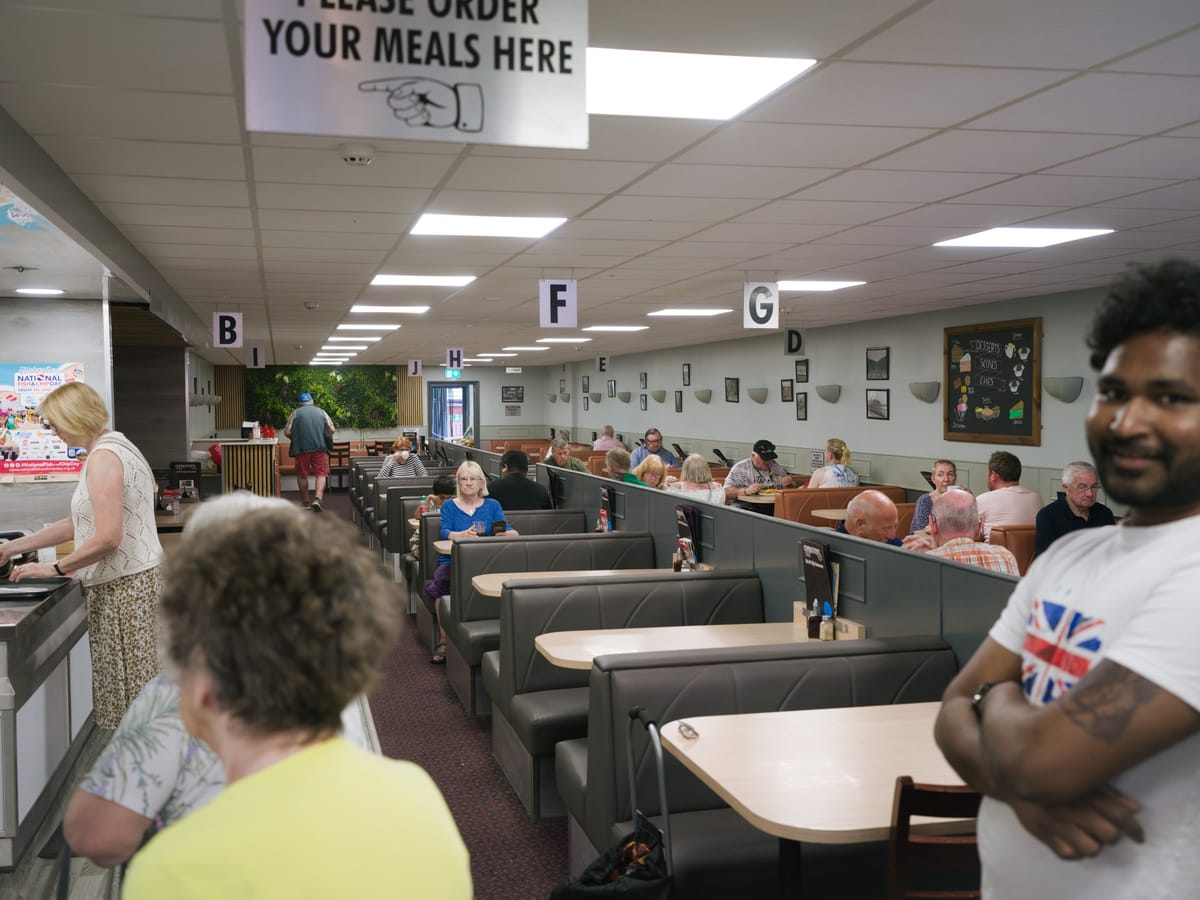
It’s 8pm on a Monday in Scarborough, and Yusuf Sefa is exhaling, a lot. He’s only had the chippy open for three hours, but it exhausts him in every way: his body is tired, his mind is tired.
This wasn’t the life he imagined when he moved to Britain five years ago, an audacious 25-year-old from the Turkish-Syrian borderlands, looking for a new career in a new country. During that post-Covid summer of 2021, he had his first taste of fish and chips in London, and it stayed with him. Later that year, he took over North Bay Fisheries near Peasholm Park in Scarborough. Many people think he’s turning out the best fish and chips in the best place to eat fish and chips in the world. Scarborough has 93 chippies, or 85.4 for every 100,000 people: the highest ratio in Britain, and Yusuf might be running the best one. So why, then, does he speak like someone’s set fire to the cash register?
We lean against his spotless stainless-steel counter, just after closing time, the air still tart with the smell of fried beef fat. This is a shop maximised for the most efficient selling of fish and chips, for only three hours a day, between 4.30pm and 7.30pm. There are no quaint paintings of Scarborough in its heyday, and there is no fading wood panelling. Instead, customers can expect floodlight-level lighting and a speckled vinyl floor that even a puppy couldn’t slip on.
Chippies are used to taking a battering. A portion of fish and chips now costs almost twice as much as when Yusuf took over. Blame Covid, Vladimir Putin, the Government. But the closure of the Strait of Hormuz is hurting them more ruinously: the trawlers are staying in their ports because it’s too expensive to go out to sea. It’s quite a fundamental problem: try running a fish and chip shop when there’s no fish.
Yusuf is still haunted by the May bank holiday. He literally had no cod, and had to remove it from the menu altogether. He points to his menu: cod is now on for £12, but it loses him money. A fairer price would be £15. He’s lucky that they prefer haddock up here, but still, it’s embarrassing.
“I’m on my own here,” he says. He’s long sent all the staff that I met earlier home: half a dozen local boys and girls, who look like they’ve all recently left school. It’s Yusuf that cleans the fryers, discards the leftovers, filters out the oil, arranges the fridge, counts the till, checks his stocks, empties the bins, sets the rota, turns down the lights, locks the door. He leads from the front. This is not a given in Scarborough: several of the more brash chippies are run from a mysterious “head office”.
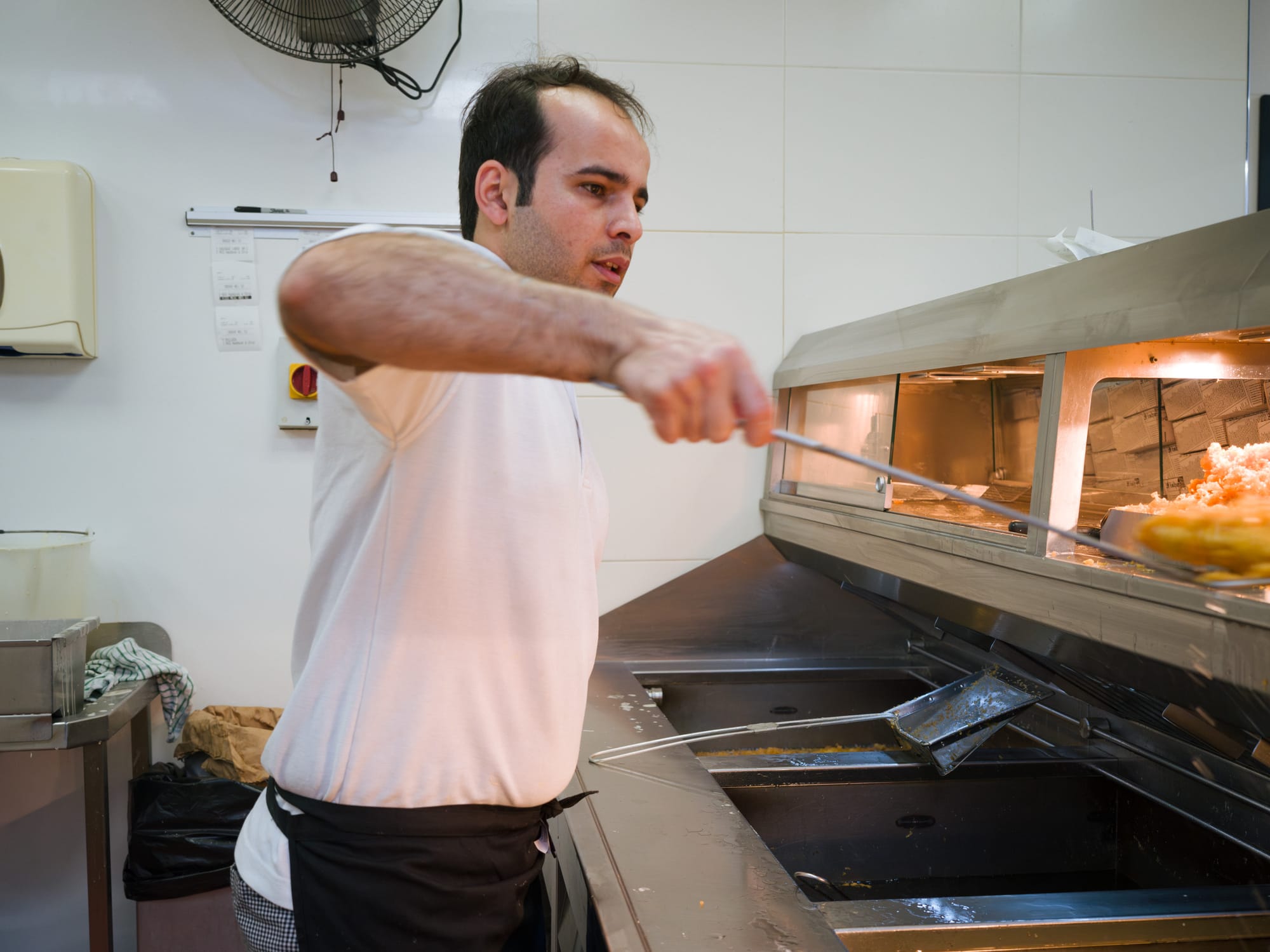
Technically, none of this is worth it. Yusuf frequently wonders whether he should do something else. “Every problem at work is a problem at home,” he says. Closing up isn’t an option, he adds, because he doesn’t want his staff to be jobless. He protects them: even though the minimum wage is going up, he pays them more.
North Bay Fisheries isn’t really viable, and it’s not going to get better. But there’s a reason that Yusuf has put his entire savings into keeping the shop alive. There’s a reason that he took notes as he watched the former owner, Ian, show him how to use the fryer. There’s a reason that he worked so hard to improve, and to fry fish better than Ian did (he thinks he now does). There’s a reason, too, for the giddy smiles on the elderly Lancastrian couple next to me, waiting for their supper.
Despite the obvious economic insanity, it all comes down to one thing: fish and chips tastes too good for us to let it die.
Where have all the fish gone? They haven’t swum off: they’re still down there in the deep. We just can’t get there, because it’s become too expensive.
This is not a paywall!
To read this rest of this article, register for free.