
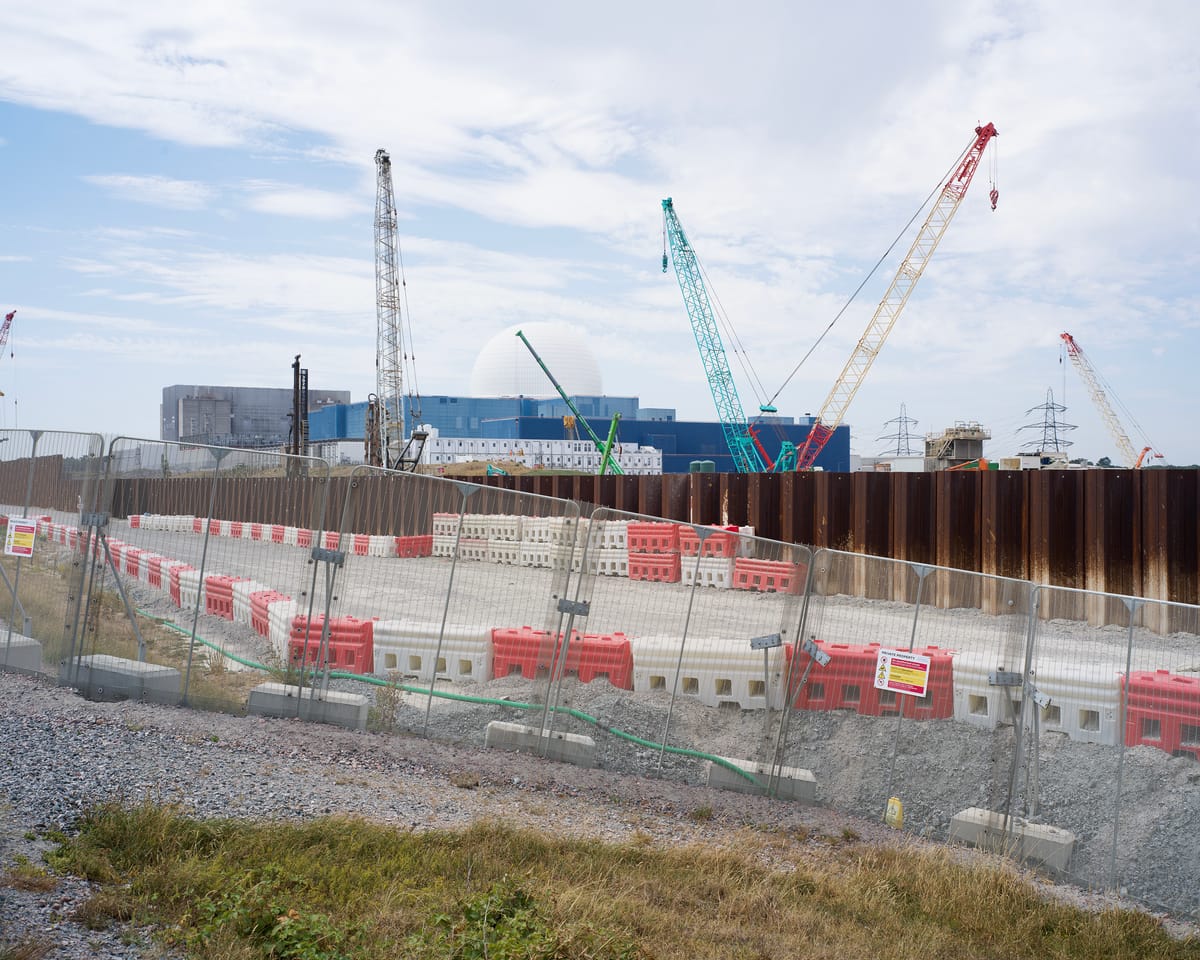
A few dozen metres from the soft, shifting Suffolk coastline, a troop of ground engineers and construction workers is digging a very deep trench.
Along its mile-long loop, they will dig 50 metres down until they hit clay, then inject the trench with stabilising slurry, fill it with steel cages and pump it with concrete. Once complete, this buried wall will seal off a chunk of former marshland from its water table in a kind of civil-engineering Tupperware box. Sometime around 2029, the engineers will pump the box dry and cap it with more concrete. From there, building Sizewell C should be straightforward: we’ll have done it all before.
This is the theory behind Britain’s next nuclear power station: that, though its predecessor at Hinkley Point ran years over schedule and doubled its budget, these were inevitable teething problems in a country that hasn’t finished a nuclear power project since the 1990s. The idea is to learn Hinkley Point’s lessons and build faster and cheaper; and build we must, because new nuclear power is the only way to affordably decarbonise British energy.
Over the past two months, I have interviewed people working across energy systems, nuclear construction, public finance, coastal management and government policy; reviewed hundreds of pages of official documents; and spent time in Suffolk with the people building Sizewell C and those who will live beside it. What I found raises serious questions about this theory and what truly underpins it.
Towards the end of one phone call, Scotland’s former chief statistician Jim Cuthbert exhaled: “This thing, to my mind, just reeks somewhat.”
We’d been talking for close to an hour about the risks in Sizewell C’s public–private funding model, adapted from Thatcher-era schemes used by privatised water companies. He told me he had one more thing to “just mention”.
“There are very powerful vested interests behind nuclear,” he said. “One of the things that one has read is that part of the push for nuclear is because of the deterrence programme. You need to have a nuclear power programme to get nuclear-trained engineers for your nuclear submarines.”
A few days earlier, I had met Andy Stirling, the researcher who first surfaced this argument with colleagues at the University of Sussex’s Science Policy Research Unit. When I arrived at his house in Lewes, his front door was swung open to the afternoon sun.
Stirling has been excavating the relationship between the civilian and military wings of Britain’s nuclear industry for over a decade now, to relatively little public attention. He greeted me in khaki shorts and we set off up a steep lane towards the yellowed summer grassland of the South Downs. Raising his voice against the wind, he began to tell me about one of the stranger reversals in recent British energy policy.
Unlock the rest of this article by becoming a paid member — with £5 off your first three months!