
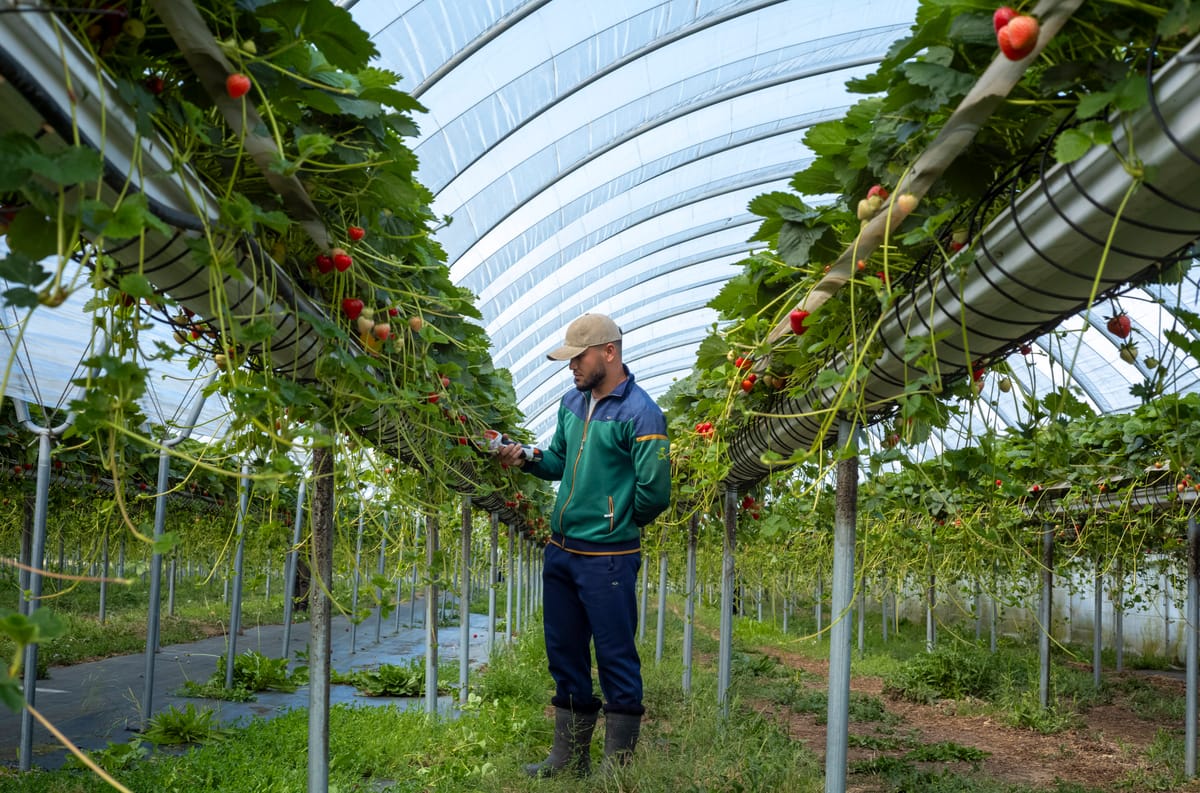
In late 2022, Ibrohim Halimov walked into a government office in Dushanbe and asked for a job picking fruit in Britain. He was in his early 30s, wanted a drastic change of scene, and had recently heard about a government-backed scheme that recruits Tajik workers for Britain's seasonal harvest.
“There aren't that many opportunities to travel abroad with a Tajik passport,” he says. “I'm considered a risky visa applicant because I'm not married and don't own any property. But I had a few friends in the UK, farm work sounded simple enough, and my English is good, so I applied.”
The office was one of four pre-departure centres run by Tajikistan's Ministry of Labour, Migration and Employment, which recruits seasonal workers for British farms. Officially, the Tajik government isn’t paid for this work. The idea is that, in return for its efforts, it gets to control the outflow of Tajik workers abroad. However, as with almost all things Tajik, “official” explanations only tell part of the story.
After Halimov arrived at the centre, a young administrator wearing an Apple Watch opened a Word document on an Apple MacBook and typed in his contact details. That in itself seemed odd: Tajikistan is the poorest of the former Soviet republics, and Halimov wondered how a junior government official could afford such expensive hardware.
Also odd was what happened next. “That was the entire registration process,” Halimov recalls. “There was no paperwork or online application.” He was told to go home and wait to be contacted. Then nothing happened.
Months later, a friend introduced him to a man who claimed to have enough influence inside the Ministry to push his application to the top of the pile — for TJS 15,000 (or £1,200 at the time), roughly half of the average annual salary in Tajikistan. Halimov, who saved up while working on the lower rungs of the international development sector, paid.
Two months later, he was invited to an interview with recruiters from the British labour provider Pro-Force at Dushanbe's Agricultural University. Hundreds of men waited outside while an official read names from a list. Halimov's was among them.
The interview went as expected: he was asked about his skills and how he would cope on a farm. Halimov thought it went well, but he never heard back. Eventually, after two months of phone calls and relying on his middle-class family’s connections, he managed to recover the money he had paid.
He was one of the fortunate ones.
Dispatch spoke to two dozen Tajik men, on and off the record, who said they had paid substantial bribes to government-connected intermediaries for nothing more than the chance to sit in front of recruiters working for British labour providers. Some handed over the equivalent of three or four times the average annual wage. Many never even reached the interview stage.
Instead, one of them confessed to no longer being able to afford a wedding for his only son — a source of great social and cultural shame in rural Tajikistan. Another talked about being fully estranged from his extended family over wasting their collective savings on an opportunity that never materialised.
Every one of them asked not to be identified, some out of shame and all out of fear. In authoritarian Tajikistan, accusing officials of corruption carries obvious risks.
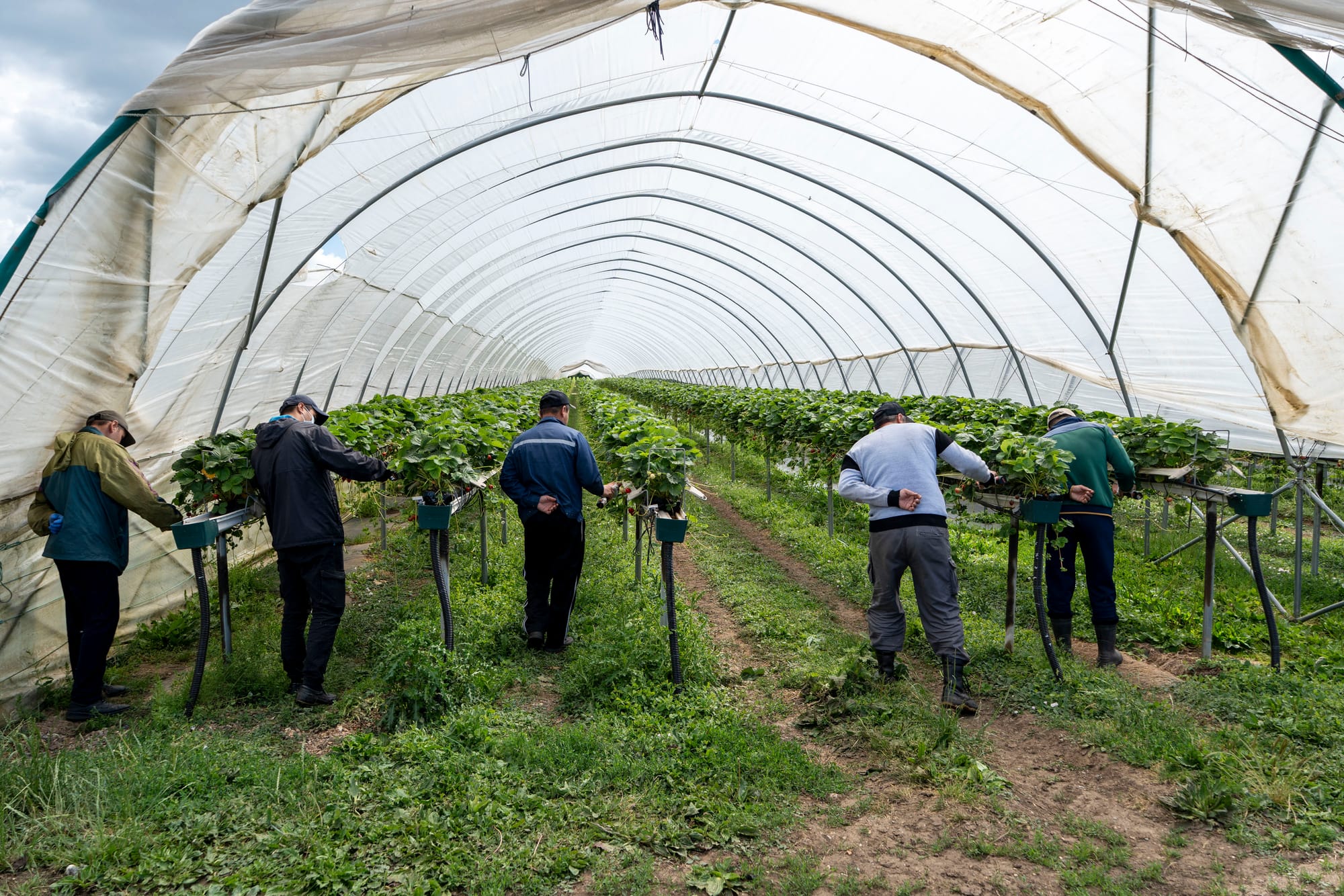
If you bought British strawberries this summer, there's a good chance they were picked by a Tajik.

You'll need to become a paid subscriber to read the rest of this article.
But here's some good news...
Our summer sale is live, making it the perfect time to join!