
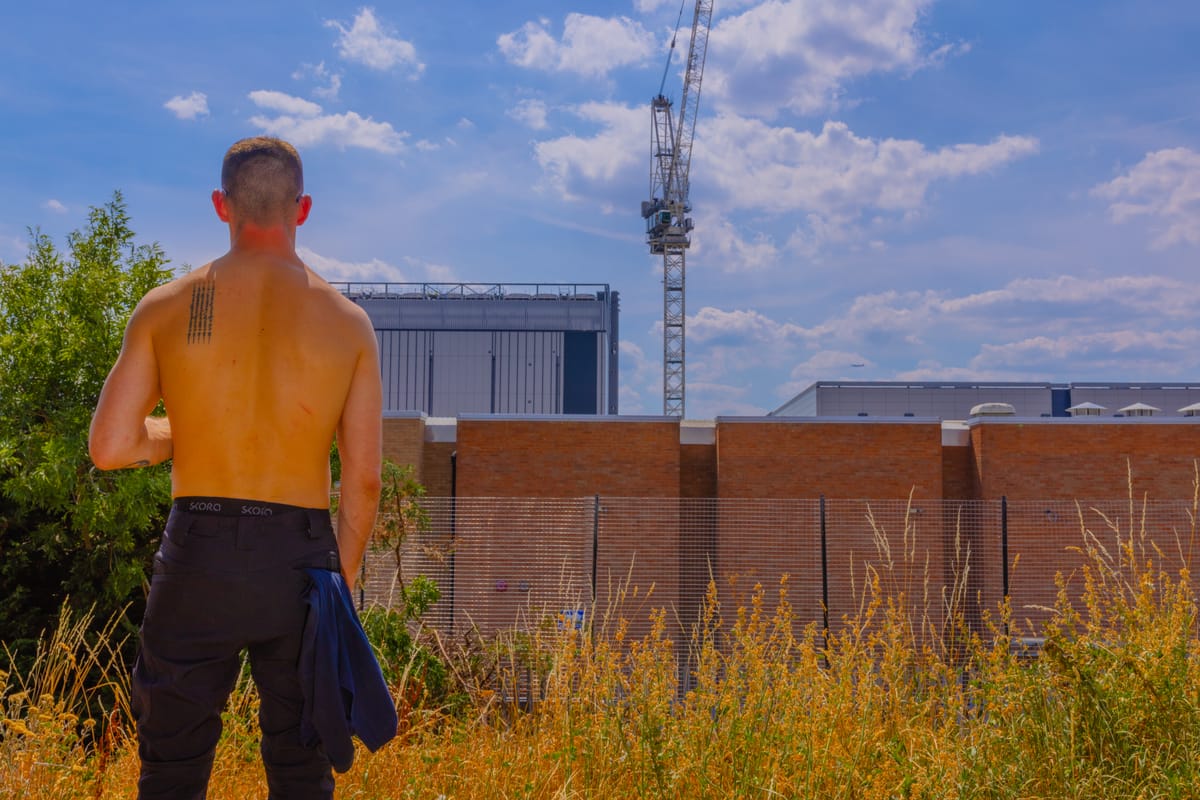
Abdul is fed up with talking about Slough’s data centres. When I ask about them, he starts to scream: “Whenever a building comes down, whenever there’s a bit of empty land, they just put another one there!”
A cynic might ask what he expected. Abdul moved here in 2014, nine years after the town's first data centre opened. But back then, they hadn't yet come to define the place. Back then, you could ignore them.
Once upon a time, Slough was best known as the setting for The Office and the home of Britain’s first zebra crossing. Today, it has acquired a different distinction: no town in Europe contains more data centres. There are around 40 of the monoliths, most of them nestled in the Slough Trading Estate, and they do not make particularly friendly neighbours.
According to a study published in March, data centres have a habit of creating urban “heat islands”, raising temperatures in their immediate vicinity by an average of two degrees and, in some places, by as much as nine. On the oppressively hot August day I visit, the mercury in Slough sits at 28°C — two degrees warmer than Oxford Circus.
“It’s getting hotter and hotter every summer,” says Abdul, 54. “Think how much heat a tiny computer gives off. Then think about what’s inside those massive buildings.”
But it’s not just the heat. There’s also the sound: a constant low-level buzz that, multiplied by 40, turns into an oppressive hum of electrical equipment, server fans and water-greedy cooling systems. It’s like hearing a mosquito somewhere in your bedroom at night: minuscule at first, but mania-inducing when left for too long.
On the edge of the Trading Estate, beyond anonymous grey buildings owned by companies with names like VIRTUS, Iron Mountain and Equinix, Sharon is watching her three grandchildren play. She has lived on the neighbouring housing estate for more than 30 years.
“We hear the noise at night,” says the 62-year-old. “We always thought it was construction.”
As more buildings have appeared over the past decade, Sharon says she’s noticed other changes on her street: rising water bills, for instance, and weaker water pressure.
“Our toilet doesn’t flush like it used to,” she says. “It’s quite scary, but nobody’s really talking about it. We had letters come when they got planning permission, but they don’t tell you what they’re building. We just thought they were factories.”

Donna, 50, another long-term resident, has come to much the same conclusion. Walking her dog towards the sun-scorched grass of Scafell Park, she gestures towards a windowless concrete block.
“I didn’t know anything about this,” she says. “I thought they were making credit card chips.”
Over the past year she has noticed flickering lights during brief power cuts, water that refuses to run cold, and the constant noise of overnight construction.
“I didn’t even know they were data centres,” she says. “I used to be interested in finding out. Then I just gave up. Who the hell are you going to fight? Are you going to go up against the government?”
In the US, they do.
The only place in the world with more data centres than Slough is Ashburn, Virginia, with more than 100 sites. Across the ever-warming pond, more than 40 campaign groups are now pushing to slow, stop or more tightly regulate new developments, backed by the environmental activist Erin Brockovich. Such is the furore that, last month, 200 firms announced that their facilities won’t increase electricity bills for residents.
This is not a paywall!
To read this rest of this article, register for free.